




Link Building
Link building strategies
Link building
There are many ways you can build an eye-catching website. But the main thing to consider here is whether your websites drive in more traffic or not. When you search the internet, you can easily come across n number of websites that face with the problem of how to generate more leads and increase web traffic. One of the finest ways to overcome this problem is adhering to SEO link building strategy. Link building is an effective and useful element to boost your website traffic in an unexpected way.
Linking your specific webpage to another website in actually an excellent way to increase the number of visitors and eventually get high ranks on major search engines. This will help reach more daily visitors to your website. Once major search engines like Google, Yahoo and Bing find your website dependable and relevant to the public, your webpage will automatically be ranked up and drive more visitors in. If you would like to use SEO link building strategy to bring in more visitors to your webpage, you should adhere to some strict guidelines to reach the anticipations of major search engines.
- Since we are living in a modernized and internet based world, it is good to provide trustworthy, updated and verified information in your website. It is also an excellent way to uplift your standing in the virtual world.
- It is extremely important to link your webpage to certain websites that are in the same niche like you, as it plays a major role in increasing your website’s rank. After all, ranking high matters here.
- Once your webpage is made to run with effective link building strategies, search engine robots will be capable of seeing your website as dependable to read into and they will ultimately rank you higher. Remember, it is totally a waste of time to link your website with certain websites that have nothing to do with your webpage or your niche.
- Beginning is always the hardest, have in mind. Once you reach your target audience, automatically many other websites will link to you and help in better ranking. If your website is more famous, then more websites will join the club and generate more leads.
SO, if you are newly constructing your webpage, don’t wait to create links on popular sites and link them with your live webpage. It will certainly help build your name online.

How to formulate link building strategies?
Listed here are some important link building strategies that you should seriously consider:
Clearly know your target market
Once you know your target audience, you can have a clear idea on building your link’s platform. You have to choose topics that totally depend on the market you choose and discuss things clearly. If the market is for business articles, then proceed with business articles and if not, think of other relevant topics you can expound.
Make a list of web pages that appeal to your target audience
Once you do have a clear picture of your existing and target audience in your mind, you could create a list of web pages that will help expand your visitor base. Try to locate websites that already appeal to your target audience. Links from these web pages will help you reach out to many new visitors.
Read more and more
By reading more and more articles on various topics, you can easily diversify your website. When you throw a glance on other articles, you will get to know what to add and what not to add in your website. Also, you could learn something that you have not written about yet. Continuous reading will help formulate your own unique writing technique and it will surely impact your business in a positive way.
Advertise on topics
You can recommend either books or media channels to your articles. By doing so, you can gain popularity for yourself since readers would probably think that you are straight to the point and you clearly know what you are discussing.
Create unique and catchy content
People tend to appeal to specific content and read on further, because they are framed in a unique and interesting way. An original and creative content will go long way, since visitors would find it more and more appealing. Many people don’t read copied content since they might have been crossed the same phrases over and time again. Today’s advancement in technology gives option to the visitors to scrutinize the originality of the content, so it is always good to be creative, catchy and unique in what you write.
Match content to websites
Try choosing sites from the created web page list that can possibly link to the content you made.
Broken Link Building
What Are Broken Links?
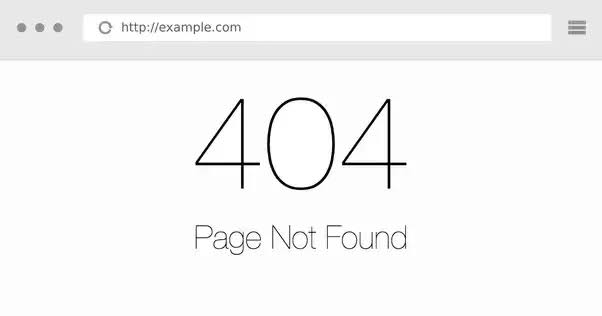
A broken link is a link on a website that no longer leads to the content that it’s supposed to be referencing. Instead, you get one of these big, unpleasant 404 graphics:
How to Find Relevant Broken Links
Using Ahrefs as our broken link checker, we can look at every 404 that currently exists on HubSpot. And not only that, a tool like Ahrefs provides information on which pages are currently linking to these broken pages.
If you’re running a marketing website and had a piece on the buyer’s journey, for example, you now have 172 leads to go after broken links.
The fun doesn’t stop there, either. It’s a pretty good bet that those 172 sites care about marketing, right? So you can also check to see if they have any broken links that you could pursue as well.
See why this strategy is so great for scaling?
There’s another conventional method for finding broken links: scraping resource pages. With this method, an SEO uses advanced search terms in Google or another search engine to find resource pages relevant to their niche.
So what does that look like in practice?
Let’s say you’re trying to promote a marketing website. You would type things like this into Google:
- marketing intitle:links
- marketing intitle:resources
- online marketing inurl:links
- online marketing blogs inurl:resources
From there, you pursue the SERP results that look promising, and manually check that all the resources they list have working links.If you come across a broken link, toss it into Ahrefs or a similar tool to see who else might be linking to the broken page.
The Key to Converting Broken Links Into Wins
Finding these links is easy, nowadays. There are plenty of backlink tools that can show you which websites are referring to broken pages. To name a few:
- Ahrefs’ Site Explorer.
- Screaming Frog.
- Moz’s Link Explorer.
But now we’ve reached the hard part – asking a webmaster to replace a broken link with one to your own website.
Outreach is difficult, no matter what link building strategy you’re using. However, that’s actually one of the advantages of broken link building.
In theory, helping a webmaster to identify broken links and fix them is something that could help you to establish a working relationship.
Final Tips to Win Broken Links
Broken link building is still a fantastic tool for earning meaningful links.
In fact, it even has significant advantages over link building staples like guest posting. And as long as you use it in the correct manner, you will see results.Don’t assume that simply having a replacement resource will be enough, though.
Webmasters get emails and pitches all the time; for you to stand out in their inbox, you need to communicate quickly, effectively, and give them a reason to work with you.
The best way to do that is to lean into your own personality to make your emails friendly, helpful, and approachable.
The longer you work at it, the more you’ll improve. All forms of link building take some trial and error.
The nice thing about it though is that you can track what emails work the best. Over time, you can change your style to generate even more wins.
Dmoz link building worth it
Dmoz for link building
I saw an interesting discussion in webmaster world. So the discussion was about the famous human edited directory Dmoz. Dmoz.org was one of the most important location to get backlinks because it was the only free high quality directory that existed in internet for a long time. No free directories can come close to the quality and importance of dmoz. But Dmoz lost its shine when Google directory stopped using Dmoz.org to populate their directory. Google realized that Dmoz is no more important because no one use it to find quality sites. Only reason people use Dmoz these days is to find a relevant category to submit their site to get a quality backlink.
So the question is dmoz backlink still a quality one? My answer is yes , a link from dmoz is still good for your website. When you enter dmoz it is for a life time. It is a lifetime free listing for your website. Dmoz belongs to mozilla network which has a high PageRank distribution among themselves. All those high PageRank distribution is passed on to Dmoz, so Dmoz will remain to be a high quality site. Dmoz itself might lose its value but a backlink from dmoz is still worth it. It is not worth dying for, there are 100s of high quality links possible from other organic sources but if you have a great website make sure you submit to dmoz and forget it. When dmoz clears it’s backlog of website submissions and reviews your website they might consider including it in their directory. Never ignore Dmoz.org for backlinks. But never lose your sleep getting a listing in dmoz, just submit and forget.
A Professional Advice for Quality SEO Link Building!
Link building in the right way is a key to success in the SEO world. Read on how you can improve your link building to achieve high rankings on Google!
As you know that the Internet is built on the links. This means that Link building has a significant role to play in achieving the rankings on the Google. If you are still living in the era where buying hundreds of spammed links was possible, consider yourself as outdated. Now, such practices have been strictly banned by the Google- making you push to go for the genuine methods of link building, so that you can create your online reputation in the most organic way.
Nowadays, what works in the world of SEO, is the superior link building techniques. You will never notice the improvement in rankings if still using quantity over quality links. Search engine rankings have become far more difficult to achieve unless you build a good relationship with some authority websites which will help your brand to stay authoritative in the eyes of search engines. Therefore, all you need to achieve superior rankings is to go through and implement the specially crafted link building techniques which are proven to work. Get the insight below.
3 Unique Ways To Perform SEO Link Building Are:
1. Create infographics For Higher Brand Awareness!
Infographics enhance the approach for an outstanding SEO link building. If you use infographics in a creative way, your website will not only look nice but will also increase your brand awareness. Carefully created infographics are a secret key to the best marketing approach and a great link-bait method to grab many eyeballs. It has been seen that aesthetically appealing visual content has higher chances of going viral as well.
So, if you possess crucial information, don’t let the opportunity go by creating it to the text rather turn it to the fascinating information with attractive infographics. The next step is to get people to link to it. For making the most out of your link building plans, you may also consider using a few trusted infographic submission sites which will boost your campaign.
2. Amplify Your Internal Linking Strategy!
If you want to increase your website’s usability, consider implementing internal linking. This SEO approach helps the users in finding the most relevant content in your website. Adding relevant internal links also helps Google understand that you have tons of correlated content in your various posts/pages which promise you to be a credible authority. This top-notch link building technique works best when you have 6-7 interlinks to different posts on your web page.
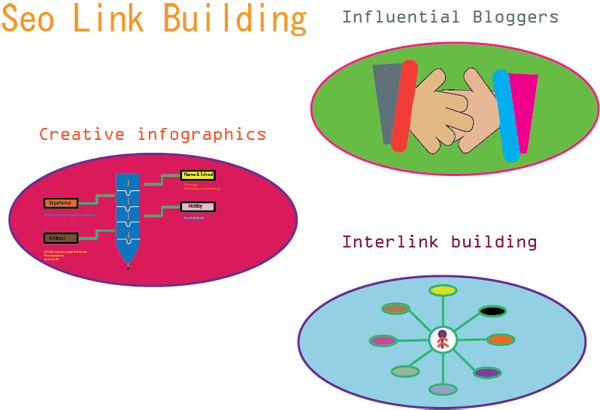
3. Make Your Reach To The Influential Bloggers!
Reaching out to the professional bloggers who are specialized in your niche helps building quality backlinks. Just try finding these influential bloggers on the social media and engage with them for the mutual benefits. This is a time-tested approach for gaining the potential users of that blog and is a worthy stuff. This way you would be getting more attention from the search engines and from the potential users online which will accomplish your successful link-building mission.
Conclusion
Reaching to the top of the search engine page is achievable if you strategically work to implement the above mentioned link building tactics. Though with the continuous change in the Google’s algorithms, it is becoming harder to be visible on the very first page but SEO link building requires persistence to be successful. Just make sure that you invest your precious time in building those high-quality links and the success will eventually be yours!
Search Engine Genie has mastered the science of link building and can teach you too. Leave your concerns for quality link building on us. Call us to know more about the services we have got to offer you!
Matt Cutts says No follow links won’t hurt search rankings in Google
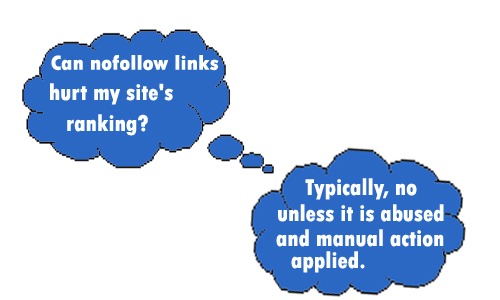
No follow links serve as the main purpose of generating traffic. What happens if you have many nofollow links? Does that have negative impact in your site?
“No, typically nofollow links cannot hurt your site – so upfront, very quick answer on that point,” says Matt Cutts “That said, let me just mention one weird corner case, which is if you are leaving comments on every blog in the world, even if those links might be nofollow, if you are doing it so much that people know you and they’re really annoyed by you and people spam report about you, we might take some manual spam action”
Here Cutts points out blog comments as an example for nofollow link as it is practiced in large scale throughout internet. In case if you are spamming in large scale, then Google may take manual action despite of nofollow links. In general nofollow links have no effect on rankings until you don’t annoy the entire web.
Ref: https://www.youtube.com/watch?feature=player_embedded&v=QSEqypgIJME
Duane Forrester, Sr Product Manager of Bing talks about natural links
Duane Forrester, Sr Product Manager of Bing posted “10 SEO Myths Reviewed” on official Bing blog. The blog post revolves around the SEO tips on what should be done to rank your site. The post is very clear about the title tags, social, video, ads, content, links and so on.
The point he makes about the link is so obvious. Duane says,
“You want links to surprise you. You should never know in advance a link is coming, or where it’s coming from. If you do, that’s the wrong path.”
http://www.bing.com/blogs/site_blogs/b/webmaster/archive/2014/05/09/10-seo-myths-reviewed.aspx
This clearly highlights that you should not do anything that would get link from other source. To make it simple, one should not buy links or even request webmasters to link to your site.
Natural links are appreciated by search engines and thereby better rankings in search results.
Understanding Matt Cutt’s Quality link building in a paraphrased version
This article is a summary of authorized link building tips gathered from the top picks of Matt Cutts videos and statements. Each of these tips are presented in a simplified version to provide a better insight of what Matt Cutt link building strategies point to.
When you have the stuff you stand out of crowd
If you want to stand out of the crowd you need to be unique and should have the stuff that everyone looks out. The same is applicable for building backlinks to websites that makes it to appear on the top of Google’s search says Matt Cutt. The ‘stuff for website’ here refers to the quality content that outranks your competitors and makes your site stand ahead in search results. Build sites with quality, unique and useful content and people will automatically start linking to your site. If your site has the stuff that others are looking for obviously they end up their search at your site.
When you are an expert you will be known by all
If you are an expert you will be known by all for your expertise. Similar is the case with building backlinks to your site. Share your knowledge by engaging yourself in a community such as online discussion forums, blogs, twitter etc. Building relationship by participating in community can influence audience that spread out your message throughout the Internet World resulting in driving authority links back to your site. But ensure that your skill should be used appropriately. Share your knowledge relevant to the community that is valuable to the users who are looking for it.
When you give you get something in return
When you offer something free to someone you will get something in return such as their blessings or a delight. Likewise you can earn quality backlinks to your site by giving away something for free that is valuable to someone. It could be anything that the community will find valuable such as chrome or a Firefox extension, a part of an open source software etc. Your freebie should be valuable to the targeted community and obviously they will start talking about it and linking to you.
When you have something that someone deserves. Share it.
If you have something that you think will be useful to someone else than start sharing it. Share or promote your stuff over the internet so that one who in need of it gets it. This can help to drive enormous traffic to your site and attracts links. You can make use of social media networks or email networks to share your stuff among the internet community.
Have your presence wherever others need you
When you are the answer of someone’s search then make your presence at the most possible areas of search mode. In this way people will find you and start approaching you for their queries. In the same manner you can attract others to your site and build backlinks by having your sites presence in high quality valuable directories or sites.
Matt Cutt says – Google handles 404 and 410 error pages in different manner
In a recent video, Google’s head of search spam “Matt Cutt” answers a question about how Google handles 404 and 410 error status code.
Here is what he conveyed:
What is 404 and 410?
He initiated the answer by explaining what a 404 and 410 actually mean to Google. These are HTTP status codes sent by the websites, whenever a browser or a Google bot request for a page.
Google make use of these status codes to determine whether the page was not found or is permanently gone.
How Google treat when it encounters a 404 and 410 error status codes?
Matt Cutt says that Google handles 404 and 410 error pages in different manner.
During the crawling process if Google bot encounters a page and sees a 404 then they keep that page protected in their crawling system for 24 hours. This is done to avoid the removal of the page when the 404 error was unintentional.
With a 410 status code Google believes that the page has gone permanently and will never return back. In such cases Google treats a page with 410 as an error.
“Penguin impacts have different levels” Reveals Matt Cutts tweet
The Google’s penguin update released on April 2012, that penalizes sites for building unnatural backlinks has been putting webmasters in a great mourn.
The penguin updates has wiped off many sites from the face of Google and some are thrown at the verge of extinction. The reason is quite simple and has been revealed by Matt Cutts in a recent tweet to one of the webmaster.
Matt Cutt tweet revealed that there are different levels of penguin algorithm we can say it as low, mild and heavy.
Here is the Matt Cutt’s tweet to webmaster:
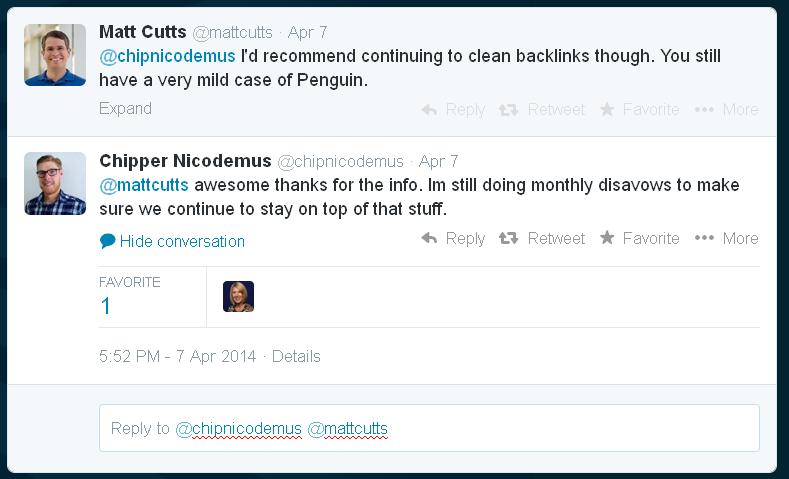
In his tweet he recommended the webmaster to carry on his backlink cleaning process as he still sees a mild case of Penguin there.
It means penguin algorithm of Google does not affect all sites equally; the impact depends on the extent of unnatural backlinks.
So the impact of penguin update on a site can be a lot or a little or somewhere amid. The tweet is very interesting and reveals that the impact of penguin algorithm varies with sites backlink quality. But it is hard to conclude that only cleaning up backlinks can get out your site from penguin algorithm.
Recovering strategies for unnatural link building penalty
It is quite painful when you see a notification of a manual action for unnatural links from Google in your Google Webmaster Tools account. It has become a common and a troublesome issue among the webmasters after Google’s unnatural link penalty changes. How to recover from this? The most important solution that everyone is eager to implement to recover their site. The answer is quite easy; by just following simple guidelines and working hard to take a prompt action can solve the issue to a great extent.
But before we move forward, identify the links that cause the trouble. Google does not provide an insight view on the unnatural links which penalized the site.
Here are a few examples which assist you to analyze the offensive links pointing your site:
- Trading Links: This includes buying and selling “do-follow” links simply to boost rankings.
- Extreme link building: Involved in excessive link building campaign just to enhance the site rankings.
- Linking to spammers: Linking to low quality and unrelated sites in an effort to manipulate page rank. This includes links from low quality and spammy directories and bookmarks and forums that just created to provide room for submitting links.
- Excessive footer links: Excessive footer links and links from blogroll and article directories.
Let’s move forward to remove this links:
Once you have an idea of the unnatural links you can start cleaning up them, in other words taking action to remove all those spammy and low quality links.
Get a list of all your links from your webmaster tool and make a separate spreadsheet of the unnatural links as you identify them. Removing unnatural links can be done in the following 3 ways:
- Removing links that are under your control
- Removing links by contacting other webmaster
- Removing links with disavow tool
Removing links that are under your control
The best place to start is collecting and removing links that are under your control. This includes links of low quality and spammy article directories, bookmark sites, profile sites, forum and blog comments and excessive footer links that just created as brook for submitting links. If you have set up links from any of this and you have direct control over, you should remove or edit them. This step of link removal process works up faster than any other ways and you can see the results immediately.
Removing links by contacting other webmaster
This step works little bit slower than the preceding as it depends on your approach and the webmaster you reach for. If during your link building campaign, you have obtained links from unrelated or low quality sites or blogs you can remove them by contacting the webmaster to do so.
It’s a fluky process. Try to approach them in a way that makes the job easier for them to carry out. Don’t give up with the first try, remind them frequently until your job is done. When done right it has the second highest possible ways to get success in your unnatural link removal process to recover your site.
Removing links with disavow tool
Disavow tool – the biggest gift of Google to the SEO community and to the webmasters who were suffered by the unnatural link penalty. This tool can be very useful to add success to your unnatural link removal campaign where you cannot implement the above mentioned steps. By making use of this tool webmasters can explicitly submit links to Google that they consider unnatural backlinks to their site. Google treats all the links submitted using disavow tool as no-follow links. Though it works slowly and takes time to bring up the change, when used appropriately it can boost up your site recovery process.
So it needs a simple understanding and patient to be successful in recovering your site from the penalty of unnatural link building.