




Create SEO-Optimised Articles Using ChatGPT In 7 Simple Steps

Creating SEO-optimized articles is crucial for boosting your website’s visibility and attracting organic traffic. In this guide, we’ll walk you through seven straightforward steps to leverage ChatGPT for crafting content that ranks well on search engines.
Step 1: Define Your Target Keywords
Before you start writing, identify the primary and secondary keywords relevant to your topic. These keywords should align with what users are searching for in your niche.
Step 2: Generate Article Outline with ChatGPT
Use ChatGPT to generate an outline for your article. Provide a brief description of your topic and ask for a structured outline. This will serve as a roadmap for your content.
Step 3: Write Engaging Headlines and Subheadings
Craft compelling headlines and subheadings based on the outline provided by ChatGPT. Ensure they are clear, relevant, and enticing to readers and search engines.
Step 4: Utilize ChatGPT for Content Expansion
Use ChatGPT to expand on the main points of your outline. Provide prompts for each section, asking for detailed explanations or insights. This will help create comprehensive and informative content.
Step 5: Incorporate Keywords Naturally
Integrate your target keywords organically within the content. Ensure they flow naturally and provide value to the reader. Avoid overstuffing, as it can negatively impact readability and SEO.
Step 6: Optimize Meta Tags and Image Alt Text
Generate compelling meta titles and descriptions using ChatGPT. Additionally, ask for suggestions on image alt text to ensure accessibility and SEO best practices are met.
Step 7: Proofread, Edit, and Optimize
Review and refine the content generated by ChatGPT. Correct any grammatical or structural issues, and ensure the article flows smoothly. Optimize for readability, coherence, and SEO.
Conclusion:
With these seven steps, you can effectively leverage ChatGPT to create SEO-optimized articles that drive organic traffic to your website. Remember to stay updated with SEO best practices to maintain high rankings and visibility in search results.
14 Tips & Techniques for SEO Article Writing

Introduction
In the digital age, creating content that not only engages readers but also ranks well on search engines is crucial for online success. Search Engine Optimization (SEO) article writing is an art that combines creativity with technical know-how. In this comprehensive guide, we’ll explore 14 tips and techniques that will help you craft articles that are both reader-friendly and optimized for search engines.
I. Understand Your Audience and Keywords
1. Audience Persona Development:
– Identify your target audience’s demographics, interests, and pain points. This understanding will guide your content creation process.
2. Keyword Research:
– Use tools like Google Keyword Planner or Ahrefs to discover relevant keywords and phrases that your audience is searching for.
II. Compelling Headlines and Introductions
1. Hook the Reader:
– Craft a compelling headline that grabs the reader’s attention and entices them to read further.
2. Engaging Introductions:
– Provide a concise overview of what the article will cover, creating anticipation and interest.
III. Optimize Article Structure
1. Clear Subheadings:
– Break down the content into sections with clear subheadings. This helps readers scan the article for information.
2. Short Paragraphs and Sentences:
– Keep paragraphs and sentences concise for easy readability, especially on digital platforms.
IV. Use Relevant, High-Quality Images
1. Visual Appeal:
– Incorporate images, infographics, and multimedia elements that enhance the content and provide visual appeal.
2. Alt Text and Descriptions:
– Ensure images have descriptive alt text and captions, which not only improve accessibility but also provide opportunities for keyword optimization.
V. Prioritize Quality and Value
1. In-Depth Content:
– Provide comprehensive information that thoroughly covers the topic. This signals expertise and authority to both readers and search engines.
2. Solve Problems or Answer Questions:
– Address common queries or pain points of your target audience, establishing your content as a valuable resource.
VI. Incorporate Internal and External Links
1. Internal Links:
– Link to relevant pages within your website to provide additional context and guide readers to related content.
2. External Links:
– Cite reputable sources or references to support your content. This adds credibility and authority to your article.
VII. Mobile-Friendly Formatting
1. Responsive Design:
– Ensure your content is optimized for various devices, including smartphones and tablets, for a seamless user experience.
2. Fast Page Loading Speed:
– Compress images and minimize unnecessary elements to improve page loading times, which is a crucial factor for SEO.
Effective SEO article writing involves a combination of audience understanding, keyword optimization, engaging content structure, and technical proficiency. By following these 14 tips and techniques, you can create articles that not only captivate readers but also rank well on search engine results pages. Remember, the key is to strike a balance between meeting the needs of your audience and aligning with the requirements of search engine algorithms. With practice and persistence, you can master the art of SEO article writing and drive meaningful traffic to your content.
14 Tips & Techniques for SEO Article Writing
Introduction
In the digital age, creating content that not only engages readers but also ranks well on search engines is crucial for online success. Search Engine Optimization (SEO) article writing is an art that combines creativity with technical know-how. In this comprehensive guide, we’ll explore 14 tips and techniques that will help you craft articles that are both reader-friendly and optimized for search engines.
I. Understand Your Audience and Keywords
1. Audience Persona Development:
– Identify your target audience’s demographics, interests, and pain points. This understanding will guide your content creation process.
2. Keyword Research:
– Use tools like Google Keyword Planner or Ahrefs to discover relevant keywords and phrases that your audience is searching for.
II. Compelling Headlines and Introductions
1. Hook the Reader:
– Craft a compelling headline that grabs the reader’s attention and entices them to read further.
2. Engaging Introductions:
– Provide a concise overview of what the article will cover, creating anticipation and interest.
III. Optimize Article Structure
1. Clear Subheadings:
– Break down the content into sections with clear subheadings. This helps readers scan the article for information.
2. Short Paragraphs and Sentences:
– Keep paragraphs and sentences concise for easy readability, especially on digital platforms.
IV. Use Relevant, High-Quality Images
1. Visual Appeal:
– Incorporate images, infographics, and multimedia elements that enhance the content and provide visual appeal.
2. Alt Text and Descriptions:
– Ensure images have descriptive alt text and captions, which not only improve accessibility but also provide opportunities for keyword optimization.
V. Prioritize Quality and Value
1. In-Depth Content:
– Provide comprehensive information that thoroughly covers the topic. This signals expertise and authority to both readers and search engines.
2. Solve Problems or Answer Questions:
– Address common queries or pain points of your target audience, establishing your content as a valuable resource.
VI. Incorporate Internal and External Links
1. Internal Links:
– Link to relevant pages within your website to provide additional context and guide readers to related content.
2. External Links:
– Cite reputable sources or references to support your content. This adds credibility and authority to your article.
VII. Mobile-Friendly Formatting
1. Responsive Design:
– Ensure your content is optimized for various devices, including smartphones and tablets, for a seamless user experience.
2. Fast Page Loading Speed:
– Compress images and minimize unnecessary elements to improve page loading times, which is a crucial factor for SEO.
Effective SEO article writing involves a combination of audience understanding, keyword optimization, engaging content structure, and technical proficiency. By following these 14 tips and techniques, you can create articles that not only captivate readers but also rank well on search engine results pages. Remember, the key is to strike a balance between meeting the needs of your audience and aligning with the requirements of search engine algorithms. With practice and persistence, you can master the art of SEO article writing and drive meaningful traffic to your content.
10 Best SEO Audit Tools

Performing regular SEO audits is crucial for optimizing your website’s performance and search engine rankings. There are several excellent SEO audit tools available that can help you analyze your website’s SEO health, identify issues, and make improvements. Here are 10 of the best SEO audit tools .
1. Google Search Console: This free tool from Google provides valuable insights into your website’s performance in search results, including indexing issues, keyword data, and more.
2. Google Analytics: While primarily a web analytics tool, Google Analytics offers valuable data on user behavior and website performance that can inform your SEO efforts.
3. Screaming Frog SEO Spider: A powerful desktop tool for Windows and macOS, Screaming Frog can crawl your website, identify SEO issues, and generate detailed reports.
4. SEMrush: SEMrush offers comprehensive SEO auditing features, including site audits, backlink analysis, keyword research, and competitive analysis.
5. Ahrefs: Ahrefs is well-known for its backlink analysis, but it also provides site auditing and keyword research tools to help improve your website’s SEO.
6. Moz Pro: Moz Pro offers a suite of SEO tools, including site audits, keyword research, rank tracking, and link analysis, to help you improve your website’s performance.
7. Sitebulb: This desktop SEO auditing tool provides detailed reports and insights, including technical SEO issues, content analysis, and site structure.
8. SEOptimer: SEOptimer is a user-friendly online SEO audit tool that provides a quick overview of your website’s SEO health and actionable recommendations.
9. WooRank: WooRank offers a website review tool that provides an instant analysis of your site’s SEO, usability, and other factors.
10. DeepCrawl: DeepCrawl is a website crawler and SEO auditing tool that offers in-depth insights into your site’s technical SEO issues and content performance.
When choosing an SEO audit tool, consider your specific needs, budget, and the size of your website. Many of these tools offer free trials or limited free versions, allowing you to test them and find the one that best suits your requirements. Additionally, keep in mind that the SEO landscape evolves, so staying updated with the latest SEO best practices is essential for successful optimization.
How to Do an SEO Competitor Analysis (Step-By-Step)

Performing an SEO competitor analysis is a crucial step in developing a successful search engine optimization strategy. By evaluating what your competitors are doing, you can identify opportunities, gaps, and areas where you can improve your own SEO efforts. Here’s a step-by-step guide on how to conduct an SEO competitor analysis:
1. Identify Your Competitors:
Start by identifying your main competitors in your industry or niche. These are the websites that are competing for the same keywords and target audience as you. You can use tools like Google, industry directories, or competitor analysis tools to find them.
2. Select Competitor Keywords:
Choose a set of relevant keywords that you and your competitors are targeting. These keywords should be central to your industry or business. Tools like Google Keyword Planner, Ahrefs, SEMrush, or Moz can help you find keywords your competitors are ranking for.
3. Analyze Competitor Content:
Visit your competitor’s websites and review their content. Pay attention to the type of content they create, its quality, and how frequently they publish. Look for blog posts, articles, videos, infographics, and other content formats.
4. Assess On-Page SEO:
Analyze the on-page SEO elements of your competitor’s content. This includes:
- Title tags
- Meta descriptions
- Header tags (H1, H2, H3, etc.)
- Keyword usage and placement
- Internal and external linking
- URL structure
- Image optimization
- Mobile-friendliness
5. Evaluate Backlink Profiles:
Examine your competitors’ backlink profiles. Tools like Ahrefs, SEMrush, or Moz can provide insights into their backlinks. Look for the quantity and quality of backlinks, anchor text usage, and referring domains.
6. Track Rankings:
Monitor your competitor’s keyword rankings. SEO tools can help you track the keywords your competitors are ranking for and their position changes over time.
7. Identify Content Gaps:
Determine which keywords and topics your competitors are not targeting or have not covered comprehensively. These gaps represent opportunities for you to create valuable content.
8. Analyze Technical SEO:
Check for technical SEO issues on your competitor’s websites, such as:
- Site speed and performance
- Mobile optimization
- URL structure
- Site architecture
- SSL certificate (secure connection)
- XML sitemap
9. Review Social Media and Engagement:
Assess your competitors’ social media presence and engagement. Look at the platforms they are active on, their posting frequency, and how their audience interacts with their content.
10. Examine Local SEO (if applicable):
If your business has a local component, check your competitor’s local SEO efforts. Look at their Google My Business profiles, local citations, and customer reviews.
11. Create an Action Plan:
Based on your analysis, create an action plan to improve your own SEO strategy. This may include:
- Updating and optimizing existing content.
- Creating new content to fill content gaps.
- Enhancing on-page SEO elements.
- Building high-quality backlinks.
- Addressing technical SEO issues.
- Strengthening your social media presence.
- Optimizing for local SEO if applicable.
12. Track Progress:
Continuously monitor your SEO efforts and track your progress over time. Regularly update your competitor analysis to stay informed about changes in your industry and adapt your strategy accordingly.
Remember that SEO competitor analysis is an ongoing process. Your competitors’ strategies may change, and new competitors may emerge. Staying vigilant and adapting your SEO strategy accordingly is essential for long-term success in the competitive online landscape.
3. WHAT ARE SEO ARTICLES? 4 WRITING TIPS

SEO articles are pieces of content created with the aim of improving their visibility and ranking in search engine results pages (SERPs). These articles are optimized for specific keywords to attract organic traffic from search engines like Google. Here are four writing tips for creating effective SEO articles:
1. Keyword Research and Selection:
- Conduct thorough keyword research to identify relevant and high-value keywords related to your topic.
- Choose primary and secondary keywords that have a good balance of search volume and competition.
- Consider long-tail keywords (more specific phrases) as they often have less competition and can attract highly targeted traffic.
2. High-Quality and Comprehensive Content:
- Write informative, well-researched, and engaging content that provides value to your target audience.
- Address the user’s query or problem thoroughly and comprehensively.
- Aim for originality in your content. Avoid duplicating content from other sources.
3. Keyword Integration:
- Place your primary keyword naturally in the article’s title, headings, and throughout the content.
- Use variations of the keyword and related terms to create a diverse and natural-sounding text.
- Avoid keyword stuffing, which can negatively impact the user experience and SEO.
4. User-Friendly Formatting and Readability:
- Organize your content with clear headings and subheadings to improve readability.
- Use short paragraphs, bullet points, and numbered lists to break up the text.
- Ensure that your article is easy to skim and navigate.
Remember, while writing for SEO is important, the user’s experience should always be the top priority. High-quality content that genuinely helps and engages the audience is more likely to earn organic traffic and backlinks, which are crucial for long-term SEO success.
What Is an SEO Article? Why Should You Write One?
Writing SEO articles can offer several benefits:
1. Increased Visibility: A well-optimized article is more likely to appear in the top search results, leading to higher visibility among users searching for related topics.
2. Targeted Traffic: By targeting specific keywords, you attract users who are actively seeking information related to your article’s topic.
3. Credibility and Authority: Ranking high in search results can establish your website as an authoritative source in your niche or industry.
4. Long-Term Benefits: Unlike paid advertising, SEO efforts can continue to drive traffic over time without ongoing expenses.
How to Write an SEO Article:
1. Keyword Research: Identify relevant keywords that your target audience is likely to search for. Tools like Google Keyword Planner, SEMrush, or Ahrefs can help you find keywords with decent search volume and manageable competition.
2. Content Planning: Outline your article with a clear structure that includes headings, subheadings, and key points. Make sure your content provides valuable and comprehensive information related to the chosen keyword.
3. Keyword Placement: Incorporate your primary keyword and related terms naturally throughout the article, including in the title, headings, and body content. Avoid keyword stuffing, as it can harm your SEO efforts.
4. Quality Content: Write high-quality, well-researched content that addresses the needs of your target audience. High-quality content is more likely to attract links and social shares, boosting its SEO value.
5. Engaging Introduction: Craft an engaging introduction that hooks readers and clearly outlines what they can expect from the article.
6. Readability: Use short paragraphs, bullet points, and subheadings to break up the content and make it easier to read.
7. Internal and External Links: Incorporate internal links to relevant pages on your website and external links to authoritative sources that support your points.
8. Optimize Images: If your article includes images, use descriptive file names and alt text to provide context and improve accessibility.
9. Meta Tags: Write a compelling meta title and meta description that accurately represent your article’s content and entice users to click.
10. Length: While there’s no strict rule, longer articles (around 1,500 words or more) tend to perform well in terms of SEO. However, prioritize quality over word count.
11. Regular Updates: Keep your content up-to-date with the latest information in your field to maintain its relevance.
12. Promotion: After publishing your article, share it on social media, forums, and other relevant platforms to attract initial traffic and potential backlinks.
13. Monitor Performance: Use tools like Google Analytics and Google Search Console to track the performance of your article in terms of traffic, rankings, and engagement.
Remember that SEO is an ongoing effort. Regularly updating your content, building backlinks, and staying current with SEO trends can help you maintain and improve your article’s rankings over time.
Search Engine Optimization (SEO) for your article

Certainly, I can provide you with some tips for optimizing your article for search engines like Google. SEO helps improve the visibility of your content in search engine results pages (SERPs), making it easier for users to find your article. Here are some steps you can take to optimize your article for SEO:
1. Keyword Research: Identify relevant keywords and phrases that users might use to search for information related to your article. Tools like Google Keyword Planner or SEMrush can help you find popular and relevant keywords.
2. Quality Content: Write high-quality, valuable content that addresses the needs and interests of your target audience. The more helpful and engaging your content, the more likely it is to attract readers and gain authority in search engines.
3. Keyword Placement: Incorporate your chosen keywords naturally into the title, headings, subheadings, and throughout the content. Avoid overusing keywords, as this could be seen as “keyword stuffing” and harm your SEO efforts.
4. Meta Tags: Craft a compelling meta title and meta description for your article. These are the elements that appear in search results and should accurately reflect the content of your article while enticing users to click through.
5. URL Structure: Create a concise, descriptive, and user-friendly URL for your article. It should ideally include your target keyword and be easy for users to understand.
6. Internal and External Links: Include both internal links (links to other pages within your website) and external links (links to reputable sources) in your article. This helps to establish the relevance and authority of your content.
7. Mobile-Friendly Design: Ensure your article and website are mobile-responsive, as Google prioritizes mobile-friendly sites in its rankings.
8. Page Loading Speed: Optimize your article’s loading speed by compressing images, using efficient coding practices, and choosing a reliable hosting provider. Page speed is an important factor in both user experience and SEO.
9. Image Optimization: If your article includes images, use descriptive file names and alt text for each image. This not only helps with accessibility but also provides another opportunity to include relevant keywords.
10. Structured Data Markup: Implement structured data markup (Schema.org) to help search engines understand the content and context of your article. This can lead to rich snippets in search results.
11. Social Sharing: Encourage social sharing of your article. While social signals themselves might not directly impact SEO, increased visibility and sharing can lead to more inbound links and traffic.
12. Regular Updates: Keep your content up-to-date and relevant. Search engines favor fresh and current content.
13. Engagement Metrics: Aim for longer dwell times (the amount of time users spend on your page) and lower bounce rates (the percentage of users who leave your site quickly). These metrics can indicate to search engines that your content is valuable.
14. Backlinks: Earn high-quality backlinks from reputable websites. These are a strong signal of your content’s authority and relevance.
Remember that SEO is an ongoing process. It might take time to see significant results, but by consistently following these best practices, you can improve the visibility and ranking of your article in search engine results
An SEO article is a piece of content written with the primary goal of improving its visibility and ranking in search engine results pages (SERPs). The aim is to attract organic (non-paid) traffic from search engines like Google by targeting specific keywords and providing valuable information to users. SEO articles are designed to address users’ questions or needs while adhering to best practices that search engines consider when determining the relevance and authority of content.
15 ways to secure your WordPress site
Securing your WordPress site is crucial to protect it from potential threats and vulnerabilities. Here are 15 ways to enhance the security of your WordPress website:
- Keep WordPress Updated: Regularly update your WordPress core, themes, and plugins to ensure you’re using the latest, most secure versions.
- Strong Passwords: Use strong, unique passwords for your WordPress admin, database, and hosting accounts. Avoid using common passwords or easily guessable phrases.
- Two-Factor Authentication (2FA): Enable 2FA for an extra layer of security. This requires users to provide a second authentication factor in addition to their password.
- Limit Login Attempts: Implement a plugin that limits the number of login attempts and temporarily blocks IP addresses after repeated failed logins.
- Secure Hosting: Choose a reputable hosting provider that offers robust security features, regular backups, and proactive monitoring.
- Use HTTPS: Encrypt data transmission between users and your site using an SSL certificate. This improves security and boosts your site’s credibility.
- File Permissions: Set appropriate file permissions for directories and files. Restrict write access wherever possible to prevent unauthorized modifications.
- Regular Backups: Schedule regular backups of your website’s files and database. Store backups in secure locations, both locally and remotely.
- Update Plugins and Themes: Keep your plugins and themes up to date to avoid vulnerabilities in outdated code.
- Security Plugins: Utilize security plugins like Wordfence, Sucuri, or iThemes Security to add extra layers of protection and monitoring.
- Disable Directory Listings: Prevent directory listings by adding an index file (index.html or index.php) to directories without an index file.
- Disable XML-RPC: If not needed, disable XML-RPC, which can be exploited for brute force attacks.
- Database Security: Change your database table prefix from the default “wp_” to a custom prefix to make SQL injection attacks more difficult.
- Regular Auditing: Conduct regular security audits to identify vulnerabilities and take necessary actions to fix them.
- Remove Unused Themes and Plugins: Delete unused themes and plugins from your site. Unneeded code can potentially introduce security risks.
Bonus: Regular Security Scans: Use online security scanning tools to identify vulnerabilities and potential issues that might be missed.

It’s important to note that no security measure can guarantee 100% protection, but implementing these best practices can significantly enhance your WordPress site’s security. Staying proactive, informed, and regularly updating your security practices is key to keeping your website safe from cyber threats.
Software project management research paper – web design and development plan
PROJECT SELECTION MODEL TO SELECT PROJECTS FOR SOFTWARE PROJECT MANAGEMENT
Prepared by Shipra Pandya and Khusboo Trivedi
ABSTRACT:
One of the most important tasks of software project management is the selection of prospective projects for development. Many organizations have developed a variety of sophisticated methods for screening and selection of projects in order to ensure that the firm does not have to face any pitfalls during the later stages of development. As part of the selection process, most of the firms adopt their own methods, based on their available data, technical criteria and organization’s policies.
All organizations select the projects they decide to pursue from among numerous options. Firms are literally bombarded with opportunities, but of course, no organization enjoys infinite resources to be able to pursue every opportunity that presents itself. Choices must be made, and to best ensure that they select the most viable projects, many managers develop priority systems—guidelines for balancing the opportunities and costs entailed by each alternative.
What criteria determine which projects should be supported? Obviously, this is no simple decision. The consequences of poor decisions can be enormously expensive. Recent research suggests that in the realm of information technology (IT), companies squander over $30 billion a year on projects that are created but never used by their intended clients.
All these call for an effective yet reliable process that highlights the various effective criteria to select a project that ensures development of successful products/software. Despite the availability of various existing models, there arises a need to address the “project selection” issue in a more detailed manner, which will cover all major and unseen criteria based on the size of the firms. The Project selection model proposed in this study will address this issue in a unique way, where; based on the size of the organization, the firm can check the required criteria that are necessary to select a project.
Index Terms: Software project management, Software project selection criteria, and project selection model.
INTRODUCTION:
Software project management is the process of effectively selecting projects and developing them which will be successful for the organization. Project selection plays a very important role in software project management, as it decides the success or failure of the project. Even though there are many other factors that play a vital role in the success or failure of the project, selection is the first phase that comes to the list.
Deciding whether or not to go ahead with a project is really a case of comparing a proposed project with a number of alternatives and deciding whether to proceed with it or not. When the project selection is made, a lot of criteria’s are taken into consideration before the organization decides to proceed. Selection of a project among a number of viable options will form the basis for every other activity that is undertaken following in the project. Many organizations have their own company policies that will decide whether or not to choose a project. Some organizations choose the strategic assessment method to choose a project, while other organizations follow the old traditional method of feasibility study that will check the advantages and disadvantages of undertaking a given project.
Feasibility study comes handy when small decisions are to be taken after choosing the project to be done. An example of feasibility study will be checking whether a particular feature incorporated in the software will be a good option or not. Feasibility study works well when small parts of the project are considered. There are many projects which are failing because of wrong selections made.
The traditional model for software project management known as the “step-wise- project planning model” emphasizes more on the development stages of the project. It assigns the phase “select project” to step 0, which indicates that the project selection stage is outside the main project planning process. But with the live examples that are seen in the real world, it is mandatory to give utmost importance to the project selection phase, where the organization decides whether or not to select a project. An independent process that will help organizations to select a project is the need of the day.

Projects are not initiated in thin air; some process needs to be there to decide which one to start with. It is not that a project is to be completely rejected if it doesn’t match the prescribed criteria. The right category that the project needs might be varying from one organization to another. It is just that project selection should be done carefully so that the organization does not suffer problems in the development phases.
The aim of this research paper is to propose a process model that will enable easy and efficient selection of software projects. The research paper will also project a comparative view of the traditional project selection criteria and the criteria put forth by the project selection model. The project selection model will categorize the types of organizations and based on the type of organization, the model will determine a set of criteria that will enable effective selection of projects.
The criteria determined by the project selection model will be subject to the type of organization. It is clearly understood that economic assessment of the project is done by every organization that does the project selection. The basis of classifying the type of organization in the project selection model will be based on the economic status of the concern so that the project that they choose will fall under their economic criteria.
PROPOSED WORK:
Project selection is making a commitment for the future. Project selection is the process of evaluating individual projects or groups of projects, and then choosing to implement one of them so that the objectives of the parent organization will be achieved. The proper choice of investment projects is crucial to the long-run survival of every firm. Daily we witness the results of both good and bad investment choices. The execution of a project will tie up the company resources, and as an opportunity cost the selection of one project may preclude your company from pursuing another project.
We live in a world of finite resources and therefore cannot carry out all the projects we may want or need. Therefore a process is required to select and rank projects on the basis of beneficial change to your company. There are many different techniques that can be used in project selection. Traditional methods that are in practice determine only whether to select the project or not. But as the technology is growing and the numbers of software projects are increasing, it is completely mandatory to select the project based on certain criteria. There are both numeric and non-numeric models are used in order to select projects. As the name implies, numeric models use numbers as inputs but the criteria being measured may be either objective or subjective. Non- numeric models are older and simpler and do not use numbers as inputs.
Some of the numeric models include:
- Present & Future Value
- Benefit / Cost Ratio
- Payback period
- Internal Rate of Return
- Annual Value
- Variations of IRR
A large majority of all firms using project evaluation and selection models use profitability as the sole measure of acceptability and hence use the numeric models to decide whether or not to select a project or not. But the drawback with these numeric models is that it does not focus on technological and commercial risk. Another disadvantage with numeric models is that they focus on a single decision criterion. There is need for a process model that highlights multiple selection criteria.
Some of the non-numeric models include:
- Unweighted 0–1 Factor Model
- Unweighted Factor Scoring Model
- Weighted Factor Scoring Model
- Constrained Weighted Factor Scoring Model
Non-numeric models are widely used by firms that do not want to focus on the profitability alone or those firms that want to assess the project based on non-numeric inputs. These models have multiple selection criteria that vary widely in their complexity and information requirements.
Hence it is observed that even though there are many proposed models both numeric and non-numeric, there is a necessity of a simpler model that is easy to implement and which gives desired results based on the type of organization. It is observed that the projects chosen sometimes do not match the type of organization that chooses them. Thus the “project selection model” will determine criteria based on the type of organization, enabling lesser failure of projects that occur due to wrong selection.
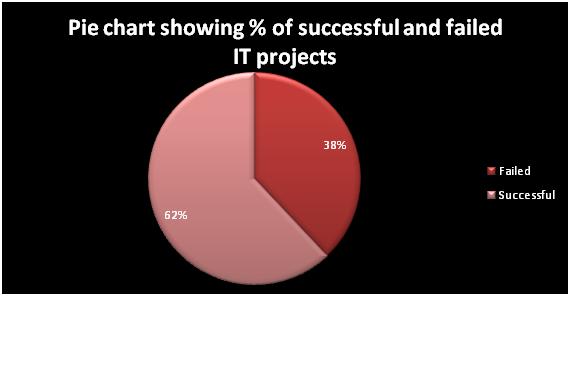
From a study, it is observed that 38% of projects fail in IT and only 62% work as planned. When the factors that are responsible for the failure of projects are considered, one among them is “wrong project selection”. If the wrong project selection criteria are taken care of, then there are chances that 38% can be brought down and the number of successful projects can be increased. The below mentioned chart determines the project success and failure percentage.
Keeping the current scenario in mind, the project selection model categorizes the organization that take up software projects into 3 categories. The classification is based on the economic criteria or the yearly turnover of the company in monetary terms. The 3 categories of the project selection model are E1, E2, and E3. The firms with highest turnover fall under the category E1, firms with lesser than that fall under category E2 and the firms with the least turnover mentioned fall under the category E3.
FIRM CLASSIFICATION BASED ON PROJECT SELECTION MODEL
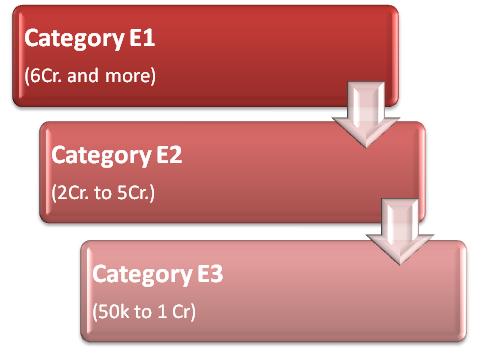
It is observed that any IT company that takes up projects will have a turnover of 50k and more in Indian currency. Thus the least turn over category starts with the basic turnover and scales up to 6 Cr and more. It is clearly known that top IT companies have their turnover in millions and billions, those companies may also fall under the E1 category of the project selection model. The basic idea of categorizing the firms based on their economic value is to determine the criteria that will best suit the needs and type of the firm. These criteria will help determine the factors that are to be considered while making a project selection. These project selection criteria can be applied to the list of projects at hand and the project that best suits the company can be taken up.
The following criteria are to be considered when selecting a project.
| S.no | Criteria | Measurement scale |
| 1. | Performance of the project | High medium low |
| 2. | Technical literacy | 5 4 3 2 1 |
| 3. | Payback period | Number of years |
| 4. | Cost of development | High medium low |
| 5. | Profit from the project | High medium low |
| 6. | Time to market | High medium low |
| 7. | Development risk | High medium low |
| 8. | Project complexity | High medium low |
| 9. | Project flexibility | High medium low |
| 10. | Government safety standard | Yes no |
These are the ten criteria that are suggested by the project selection model that will be applied to each of the category of classification made by the project selection model. It is observed that these are the basic criteria that are needed for any project selection. These criteria together when applied to a project helps determine the selection of the project. Projects that are selected based on the criteria value suggested in the project selection model are less prone to failure and more efficient. The contexts in which these criteria are evaluated are:
- Performance of the project:
Performance of the project is calculated by comparing the proposed project with the other projects that are available for selection. The performance can be determined either by the cost or the purpose the project serves. The performance is rated in terms of high, medium or low. Projects with low performance are discarded from the list.
- Technical Literacy:
Technical literacy determines the technical skills that are required for the project to be developed and implemented. The technical skills of an employee may be in terms of number of years of experience. Hence the rating scale is from 5 to 1, with the highest technical literacy being 5 and lowest being 1.
- Payback period:
Payback period is the numeric model for evaluating the project. It is determined by the time taken to gain a financial return equal to the original investment. The time period is usually expressed in years and months. Hence the approximate payback period for E1, E2, and E3 is determined in number of years.
- Cost of development:
The cost of development criteria indicates the reasonable cost estimate for developing the project. The costs of all the proposed projects are calculated and rated on a scale high medium and low. The projects that fall under the high category are considered last, as those projects might have a return on investment.
- Estimated Profit from the project:
The profit that will be derived from the project is estimated by subtracting the expect income from expected expenditure that will be incurred. Profits of all the projects are calculated and rated on a scale of high medium and low. Projects falling under the category low are discarded.
- Time to market:
Time to market criteria is for projects that are generic. If the time taken to promote the project is more than the development then such projects have no value. Thus the time taken to market can be calculated in months or years (take common parameter for all projects) and rated on high, medium and low scale.
- Development risk:
The development risk of a project is the risk that the company faces during the development phases. It can be requirements risk, lack of resources, lack of personnel, change in requirements etc. all the risks pertaining to development are identified and ranked on the high, medium and low scale. Projects with high development risk are not considered.
- Project complexity:
The complexity of the project can be determined by the complexity factors such as LOC (lines of code), FP (function points), and man hours required for the development of the project. These complexity factors are calculated on a high medium and low scale.
- Project flexibility:
Project flexibility is a very important criterion when selecting projects. Flexibility refers to the capability of the project to adapt to changing environment. Portability and interoperability factors are checked to determine the project flexibility. The project flexibility is also ranked on a high, medium and low scale.
- Government safety standard:
The government safety standard is the last criteria proposed by the project selection model. It checks to determine if the project developed is abiding to the legal rules and regulations and is in the government safety standard list. This criterion is rated on a yes/no scale.
The desired values for any category of organization are:
| Performance of the project | High |
| Technical literacy | 5 |
| Payback period | 1year |
| Cost of development | Low |
| Profit from the project | High |
| Time to market | low |
| Development risk | Medium |
| Project complexity | Low |
| Project flexibility | High |
| Government safety standard | yes |
But as it is observed no project fulfills all the criteria in the desired rating scale, the project selection model applies these 10 criteria to the 3 categories classified by the project selection model. The desired values that the criteria should possess are specified in the project selection model below.
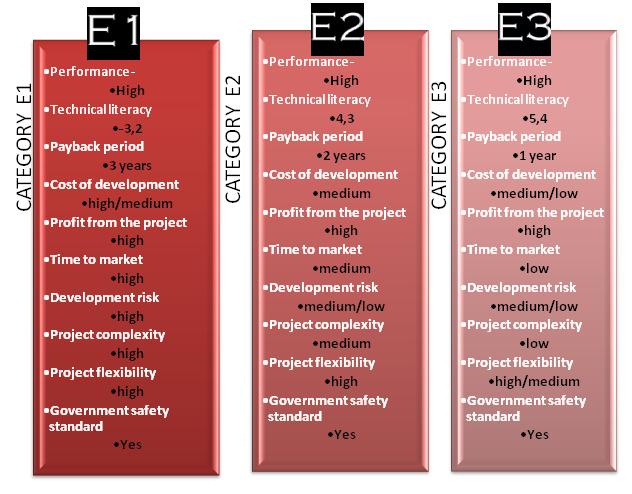
It is observed that the category E1 organizations can select projects that have technical literacy 3, 2 as the organization s capable of hiring training teams. But the E3 category cannot select projects with such medium technical literacy as the turnover will be low and the organizations cannot afford to spend on training and development; as the cost incurred might affect the profit of the concern.
Thus the project selection model aims to simplify the project selection mechanism in a way that the projects selected using this process does not end up in failure.
PROJECT STUDY
Case: A company has selected an alpha project based on a numeric model namely Payback Period. As the name suggests, the selection of a project among varied choices will be made based on the period of time required to recoup the funds expended in a given project. Projects with shorter payback periods will be preferred over longer payback period projects. The company has selected the alpha project after evaluating it with other alternative projects depending upon the criteria under Payback period.
The same alpha project is undertaken and selection model is applied to derive at a conclusion of whether a project selected by using other numeric and non-numeric models can be selected when the selection model is used for evaluation. The criteria in the selection model are applied to the alpha project to determine the following values:
| Performance of the project | Medium |
| Technical literacy | 3 |
| Payback period | 3 year |
| Cost of development | Medium |
| Profit from the project | High |
| Time to market | High |
| Development risk | Medium |
| Project complexity | Low |
| Project flexibility | High |
| Government safety standard | Yes |
For a project to be selected, the below mentioned requirements are to be met:
- The technical literacy rate should be greater than or equal to 3.
- Payback period should be as low as possible
- Cost of development can vary depending upon the size and complexity of the project
- Time taken to market the proposed project should be less than the overall development time. Hence, preferably it should be low.


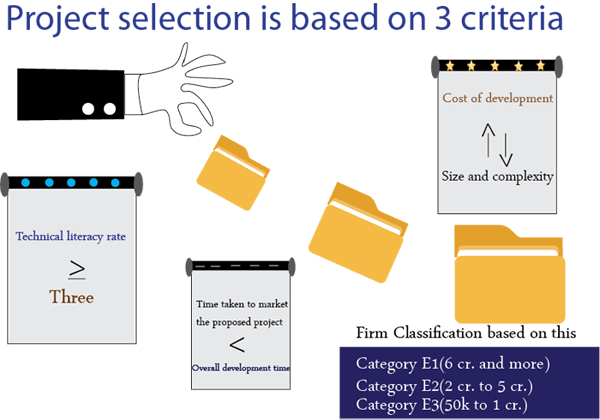
Henceforth, the alpha project which was selected when Payback Period numeric model was adopted cannot be selected when selection model is applied to it. The type of model used for selecting a project greatly depends upon the nature, objectives and size of the company. It is not always necessary that a project that is found appropriate when using a particular model will be favorable when a different model is used.
CONCLUSION
Project selection is a very vital stage that any company goes through. Selecting the right project is a very mandatory decision that any company takes. If any wrong project is selected, the development and future execution of the project is bound to suffer. According to various researchers and practitioners, project selection is a risk in itself, whose consequences are uncertain. There are many project selection models that exist, which enable project selection easier. But the project selection model proposed in this research paper is a combination of both numerical and non numerical project selection models that determines criteria based on the turnover categories of the company.
The turnover of any company determines which category the company belongs to, and determines which criteria can be adjusted according to the category of the company which will determine whether a prospective project will be selected or not. Thus it is recommended that the project selection model be used to select prospective projects in any company which will ensure no wrong projects are selected, and selected projects turn out to be successful.
REFERENCES
- Software project management, third edition, Bob Hughes and Mike Cotterll
Prepared by Shipra Pandya and Khushboo Trivedi
Search
Categories
Recent Posts
- <strong>Create SEO-Optimised Articles Using ChatGPT In 7 Simple Steps</strong>
- <strong>14 Tips & Techniques for SEO Article Writing </strong>
- <strong>14 Tips & Techniques for SEO Article Writing </strong>
- <strong>10 Best SEO Audit Tools</strong>
- <strong>How to Do an SEO Competitor Analysis (Step-By-Step)</strong>