




Site Architecture That Helps Search Engines Find You.
Navigation
- Be consistent and consolidate information wherever possible. “Help,” “FAQ,” and “Instructions” can be all put into one page or one category that makes it easy for users to find that type of information. Break information up inside the category if you need to. In addition, saying “Instructions for filling out such and such form,” uses the keywords of what the page is about, helping search engines find the page.
- Use breadcrumb trails. This type of navigation literally creates a trail that users can follow back to where they came from. For example: Home > Category 1> Bucket A > Bucket B > Bucket C. Breadcrumbs are used in conjunction with regular navigation. They don’t replace it. They’re nearly always text links, in a smaller font. Large sites should have top-of-the-page navigation pointing to the top-level pages and category navigation on the left with breadcrumb navigation on the page itself. Footer navigation should be placed at the bottom of the page.
- The footer of web pages is also important. It’s important to give your users a quick way to the home page or key pages. The footer is a good place to put text-only links that are redundant to the top-level navigation, so your user doesn’t have to scroll back up to the top of the page. Supplying this added convenience also allows another chance for you to use those important keywords, and helps users who have their graphics turned off.
- Use keyword phrases within your main content links. These links may go to the exact same place as top-level navigation links but they’re labeled with keywords related to the same topic. For example, a top-level navigation link may be labeled “Local Weather Forecasts,” while a text link lower down on the page from inside a paragraph (pointing to the same page) might say “Weather for your Zip Code.” Since users and search engines use both terms heavily, you’re covering your bases by taking this extra measure.
- Always use a sitemap. Search engines love to have a site map through which they can quickly and easily access your site’s pages for indexing. When creating a site map for your websites, be sure to put it at the root level (not within any subfolders or directories), link to it from your home page, and name it site_map.html (or .htm, whichever extension you are using for your site). A table of contents is also helpful in some cases.
How Internal Linking Affects PageRank
Your internal linking structure will not have an effect in increasing PR, but sharing PR inside the overall site, with falling powers as you go deeper into the arrangement of your web site.
* Be sure that your primary page, the index.htm page, all links to your secondary pages.
* Also make sure that your secondary pages link to each other.
* Link your secondary pages to third level pages inside their sub-directory, sub-domain, or level.
* Link the third level pages within each particular sub-directory or sub-domain to one another.
* Then link the third level pages again back to the secondary page that it was linked from.
* Make sure that there is no heavy linking between the third level pages.
* You can link to pages, regardless of level, that are more relevant.
* Regardless of level, link to pages, where the text on the page that is being linked from is keyword specific to that page that you are linking to.
* If there are fourth level pages also, track the same linking structure that was laid out in this checklist.
* link pages within your site that are appropriate to each other.
* Use always keyword specific link text when you are linking between pages.
* Use typical HREFs in links that are easy for search engine robots.
Fetch effective one way links
Links are votes offered by one website to another website. The vote gives credibility to the linked site, but each vote carries different weight. The link building voting system comes up with good popularity for the website. The vote casts has different weight and vote strength.
The links must be natural and people start to get links, the search engines starts to gather information about your website. Make sure that you have obtained only quality or good links not bad links. The link should be a quality link and it should rank for your site. A webmaster can easily buy links software or service from the market. The webmaster enters the search engines and posts their links either for regular links or reciprocal links and so on.
Start Your Bookmarks
How to Determine the Best Keywords
- Capture the “exact phrase” that searchers entered.
- Give insight into the number of words searchers are using.
- Provide a rich source of keyword data.
- Variant spellings
- Slang, acronyms, and abbreviations
- Plurals
- Synonyms
- Keyword Suggestion Tool
- Wordtracker
- Google AdWords
- Snap
How important is Google PageRank?
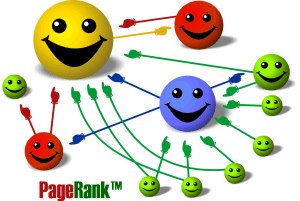 Don’t try to obsess over your Google PageRank – it is just one of the factors in the collective algorithm that Google uses to put up SERPs. Though having lots of relevant, inbound high PageRank links is a fine thing, high PR does not guarantee high placement in SERPs.
Bear in mind that Google will calculate your PR based on the page criteria and the title tag of the linking page. Google can penalize if it detects a large number of irrelevant links in a site. How effective is Google in determining link relevance is a subject of discuss among SEOs. However, building related links is a good rule of thumb so as to follow if you want to boost your site’s PR.
Link building Services – Top 5 benefits
Most of them are free – Free is something that is been attracting people from ages. This also cost you nothing to send a mail to webmaster and asking for little shared traffic.
Credibility score – When you do article submission to lots of article directories, you increase your credibility score. Because such submission process include resource box where along with website url you also get a free link each time someone uses it or locate it on search engine.
Relevant Traffic – By selecting which sites offer you a link, you are actually hand picking the customers who would come to your website. Since you are aware who would benefit the most from what you need to provide, it makes wisdom for you to look out the websites, which would attract your buyers.
Becomes Interesting – Your site becomes newsworthy when you present press releases of your site, as it becomes news and that in turn draws traffic.
Increase sales and profit – You can find the most well-liked site in your niche and associate with them. You might get a wide range of people, but your sales would thank you for doing it.
These are only few reasons why a link exchange plan is significant. Look then who are doing it, and how flourishing they are. Then get out there and copy it.
Facts about Link Building
Link quality is extreme more important than link quantity; however, as long as the links get indexed any link to be expected help make your site seem more reliable to search engines such as Google and Yahoo!.
Page Rank vs Anchor Text:
Anchor text is more significant than Page Rank.
Reciprocal Link Requests:
Most people who ask for link exchanges are not worth exchanging links with.
Link Building Timeline:
It can take many months and hundreds (or thousands) of dollars to erect an effective linking campaign.
One Way Links:
Directory links, press releases, and related website links can help you build an efficient linking campaign without the worries associated with exchanging links with vague sites.
Promoting Good Ideas:
It is far easier to create an idea worth promoting than it is to support an idea on worth promoting.
Social Bookmark Optimization
Application of Link Building Concept
Don’t waste time in writing description for the page. Robots can focus individually on links. So, try to avoid unnecessary description for the page. The webmaster can divide the sitemap into series. The spiders crawls only the links exist in the page and the sequence of sitemap helps to include all unique pages needed and increase the weight of each page to crawl. Based upon the sitemap pages either link in the footer of the page or on the main page of the site.