




What Is JWT Authentication and How Does It Work?
Modern websites and applications often need a secure way to identify users after they log in. Whether it is a dashboard, ecommerce account, mobile app, or API, the system needs to know who the user is and what they are allowed to access.
One common method used for this purpose is JWT authentication.
JWT, short for JSON Web Token, is widely used in web applications because it provides a simple way to send verified user information between a client and a server.
What Is JWT Authentication?
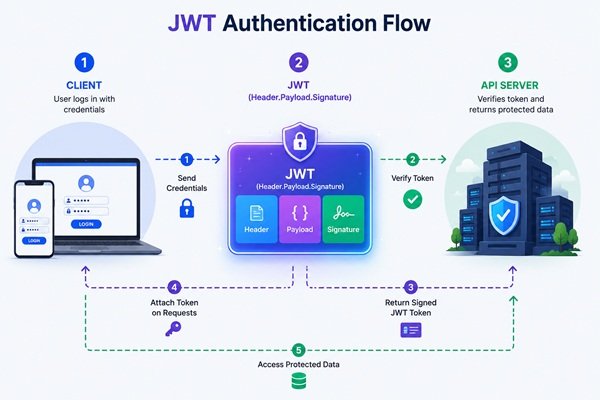
JWT authentication is a token-based method used to verify a user’s identity.
When a user successfully logs in, the server creates a token containing selected information about that user. The token is then sent back to the application.
For future requests, the application sends the token to the server. The server checks whether the token is valid before allowing access to protected resources.
This means the user does not need to enter their username and password every time they move between protected pages.
JWTs are especially common in APIs, single-page applications, mobile apps, and systems where the frontend and backend operate separately.
How Does JWT Authentication Work?
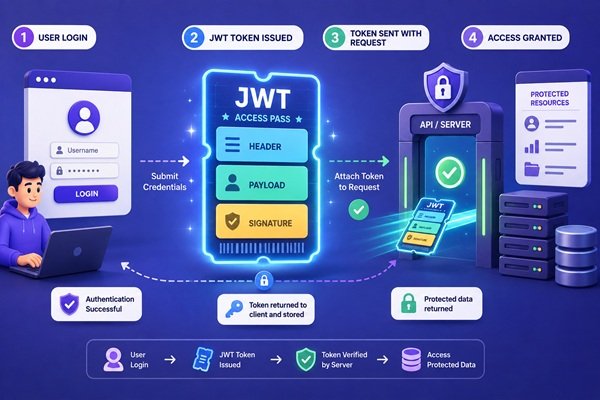
The process usually begins when a user enters their login details.
The server checks those credentials against the stored account information. If they are correct, the server generates a JWT and sends it back to the application.
The application stores the token and includes it when requesting protected information.
When the server receives the request, it verifies the token. If the token is valid and has not expired, the request can continue.
If the token is missing, invalid, or expired, access can be denied.
This creates a simple authentication flow where the token acts as proof that the user has already logged in successfully.

What Information Does a JWT Contain?
A JWT is generally made up of three parts: a header, a payload, and a signature.
The header contains information about how the token is created. The payload contains selected data, such as a user identifier, role, or expiration time.
The signature helps the server verify that the token has not been altered.
One important point is that JWT data is not automatically private just because it is inside a token. Sensitive information such as passwords should never be stored directly inside a JWT.
The token should contain only the information necessary for authentication and authorization.
Where Is JWT Commonly Used?
JWT authentication is frequently used when a website or application communicates with an API.
For example, a frontend application may use JWTs to access a user’s profile, account settings, orders, or dashboard information after login.
JWTs are also useful in mobile applications because they can provide a convenient way to maintain authentication between the app and a remote server.
They are often used in systems where multiple services need to recognize the same user.
However, JWT is not automatically the best choice for every application. The authentication method should always match the security requirements and architecture of the project.
JWT vs Session-Based Authentication
Traditional session-based authentication usually stores information about the logged-in user on the server. The browser receives a session identifier that allows the server to recognize the user during later requests.
JWT authentication works differently because much of the necessary authentication information can travel inside the token itself.
Session authentication can be easier to control when a user needs to be logged out immediately because the server manages the session directly.
JWTs can work well for APIs and distributed applications, but developers need to carefully manage expiration, token storage, refresh mechanisms, and revocation.
Neither method is automatically better in every situation. The right option depends on the application’s design, security needs, and scale.
Common JWT Security Mistakes
One of the biggest mistakes is storing sensitive information inside the token.
Developers should also avoid using tokens that remain valid for excessively long periods. Shorter expiration times can reduce the damage caused by a stolen token.
Token storage also needs careful attention. If a token is exposed through insecure browser storage or a vulnerable application, an attacker may be able to use it to impersonate the user.
Another mistake is assuming that a signed JWT automatically makes the entire authentication system secure.
JWT is only one part of application security. Secure connections, strong password handling, proper authorization, input validation, and careful token management are still essential.
Final Thoughts
JWT authentication provides a flexible way for modern applications to verify users and protect restricted resources.
It is especially useful for APIs, mobile applications, and frontend-backend architectures where authentication information needs to move between different systems.
However, JWT should not be treated as a shortcut to security.
Developers still need to think carefully about token expiration, storage, permissions, sensitive information, and how users are logged out or revoked.
When implemented correctly, JWT can be a practical and effective authentication method for modern web applications.
No comments yet.