




90% of the Rankings Equation Lies in These 4 Factors
I think sometimes, in the field of search marketing we try to make the concept of ranking more difficult than really it is. True – there are many ways to build a link, an endless number of keywords, thousands of exclusive sources to drive traffic all along with analytics, usability, design, conversion testing, etc. but, when it comes to the very precise question of how to rank well for a particular keyword in standard results at the engines, you’re talking about a few big key components.
#1 – Keyword Use & Content Relevance

As I don’t believe in keyword density, no doubt that using your keywords intelligently to create a page that are relevant to the query and the searcher intent is critical to ranking well. You can use the primary keyword phrase as follows:
.In the title tag once or possibly twice if it makes sense.
.one time in H1 header tag of the page
.At least 3X in the body copy on the page
.once in bold
.once in the alt tag of an image
.Once in the URL
.once in the meta description tag
.not in link anchor text on the page itself.
For who’ve done nonsense words testing to see engines respond, you know you can certainly get extra value out of going wild and filling the keywords all over the page, but we’ve also seen that once you reach this level of saturation you’re getting about 95% of the value you can get.
#2 – Raw Link Juice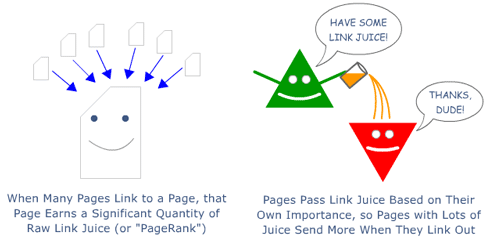
Some call this PageRank or link weight – it refers to raw quantity of global link popularity to the page. You can raise this with internal links and external links. A page with an exceptional amount of global link power can still rank remarkably well in Google & Yahoo!
Link juice operate on the fundamental principle used in the early PageRank formula – pages on the web have some inherent level of significance and that the link structure of the web can help to point out pages with greater and lesser value. Those pages linked to by many thousands of pages are very important and, when they link to other pages, those pages also have great importance.
Moving this theory to your own pages, you can observe how raw link juices have a large impact on the search engines score their rankings. Growing global link popularity needs both link building and intelligent internal link structure.
#3 – Anchor Text Weight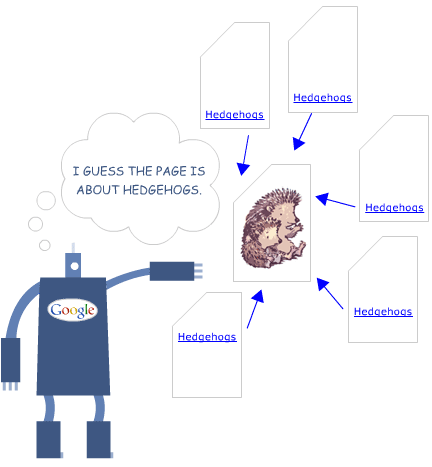
As search engines evolved in the early 2000’s, they selected up on the usage of anchor text .The anchor text of links is a critical part of the ranking equation, and seen in great quantity, it could overshadow many other ranking factors – you could see many web pages weaker in all the other three factors I explain here ranking primarily because they’ve earned many thousands of links with the exact anchor text of the phrase they’re targeting.
Note that anchor text come from both internal and external links, trying to optimize, think about how you’re linking to from your own pages – using generic links or image links.
#4 – Domain Authority
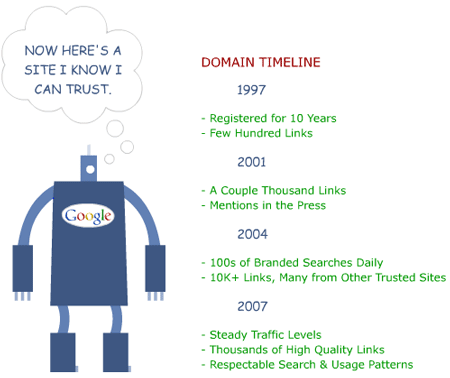
This is the most complex factors I described in this post. Basically, it refers to a variety of signals concerning a site that the search engines use to decide legitimacy. Does the field have a history in the engine? Do many people search for and use the domain? Does domain have high quality links pointing to it from other trustworthy sources?
To influence this positively, you need to do is operate your site in a way consistent with the engines’ guidelines. If you desire to earn a lot of trust early in a domain’s life, get many sites that the engines already trust to link to you.
No comments yet.
Leave a comment
Blogroll
Categories
Recent Posts
Recent Comments
Archives
- December 2023
- November 2023
- October 2023
- September 2023
- August 2023
- June 2023
- May 2023
- April 2023
- March 2023
- February 2023
- October 2020
- January 2020
- January 2017
- January 2016
- July 2014
- June 2014
- May 2014
- April 2014
- December 2012
- October 2012
- July 2012
- May 2012
- April 2012
- March 2012
- February 2012
- January 2012
- December 2011
- November 2011
- October 2011
- September 2011
- August 2011
- May 2011
- April 2011
- July 2010
- December 2009
- March 2009
- February 2009
- January 2009
- December 2008
- November 2008
- October 2008
- September 2008
- August 2008
- July 2008
- June 2008
- May 2008
- April 2008
- March 2008