




User Optimization is the real SEO
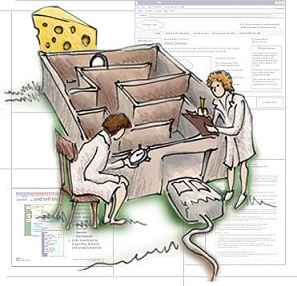 You may be confused by telling you that you need to ‘optimize for search engines’ when you don’t need to at all. The core aspect of search engines that we always forget is that, not only they are programmed to act like users, but they were created, and are controlled, by users.
The similarities between elements that are important to search engines and the elements that are important to users are remarkably obvious.
Let’s have a look
. Titles and the meta content
o Search engines: Uses this one to pick up on what the page is about, and rank it accordingly.
o Users: Uses to pick up on what the page is about, and to decide whether or not to use it.
. Header tags
o Search engines: Use to assess what the main body of text is about, and rank the page accordingly.
o Users: Use them to swiftly see what the main body of the text is about.
. Anchor Text
o Search engines: Use this to realize what the page that is being linked to is about, and to rank that page according to its significance to the anchor text, and the quality of the inbound links.
o Users: Used to understand what the page that is being linked to be about.
. Alt Attributes
o Search engines: Used to understand what the image is about, or what it is representing.
o Users: Uses this to understand what the image is, or what it is representing. Mostly disabled users and people who browse with images turned off.
. Page Copy
o Search engines: Use to set up which search query content is relevant to.
o Users: Use this to set up if the content is related to what they are looking for.
. Strong Tags
o Search engines: Use to pick out important key elements within the copy.
o Users: Use to scrutinize the copy and pick out the very important words.
Many people go crazy when trying to ‘SEO’ their sites, thinking ‘right, here are a few techniques to use, let’s apply them everything’. This unsurprisingly, doesn’t work.
Actual SEO is User Optimization because…
Think on the techniques you’re using to rank higher, and ask yourself would a user appreciate it? If the reply is yes, then the chances are that a search engine will too.
Here is a pair of examples
You put in 35 key phrases to your page copy, and but all in strong tags.
o Users will say: I can’t read it, as it looks terrible.
o Search engines will say: It is spam
If you use clear anchor text throughout your site that is relevant to the page that is being linked to.
o Users find it really easy to navigate.
o Search engines finds anchor text is relevant to the page content.
The jest of it is that if you’re pissing off your users with your ‘optimization’ attempt, then you’re perhaps annoying the agony out of search engines too.
First write your site, code, and your content for your users. It doesn’t issue how many people find you in Google if your content is valueless to the visitors. Make your code and content for users and you’ll see a fine correlation to your rankings too.
SEO don’t mean tricking search engines for ranks.
Search engines always work by looking for the best sites to rank.
SEO just means improving your site until it’s good enough to rank.
No comments yet.
Leave a comment
Blogroll
Categories
Recent Posts
Recent Comments
Archives
- December 2023
- November 2023
- October 2023
- September 2023
- August 2023
- June 2023
- May 2023
- April 2023
- March 2023
- February 2023
- October 2020
- January 2020
- January 2017
- January 2016
- July 2014
- June 2014
- May 2014
- April 2014
- December 2012
- October 2012
- July 2012
- May 2012
- April 2012
- March 2012
- February 2012
- January 2012
- December 2011
- November 2011
- October 2011
- September 2011
- August 2011
- May 2011
- April 2011
- July 2010
- December 2009
- March 2009
- February 2009
- January 2009
- December 2008
- November 2008
- October 2008
- September 2008
- August 2008
- July 2008
- June 2008
- May 2008
- April 2008
- March 2008