




AI Overviews
AI Overviews and Organic Traffic: What SEO Teams Should Measure
Imagine a potential customer searches for a quick answer, reads a clear summary right at the top of Google, and closes their tab without ever clicking a link.
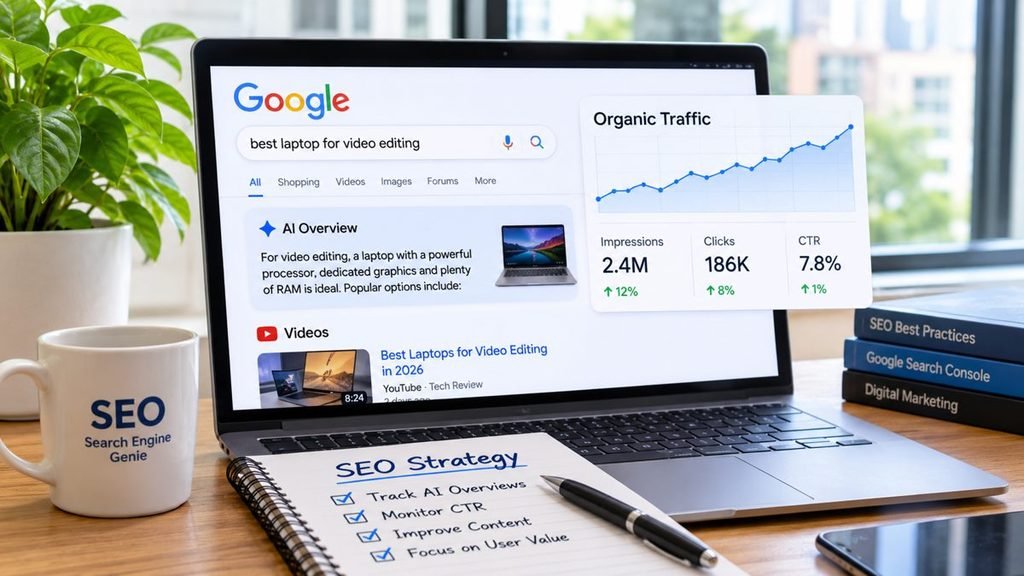
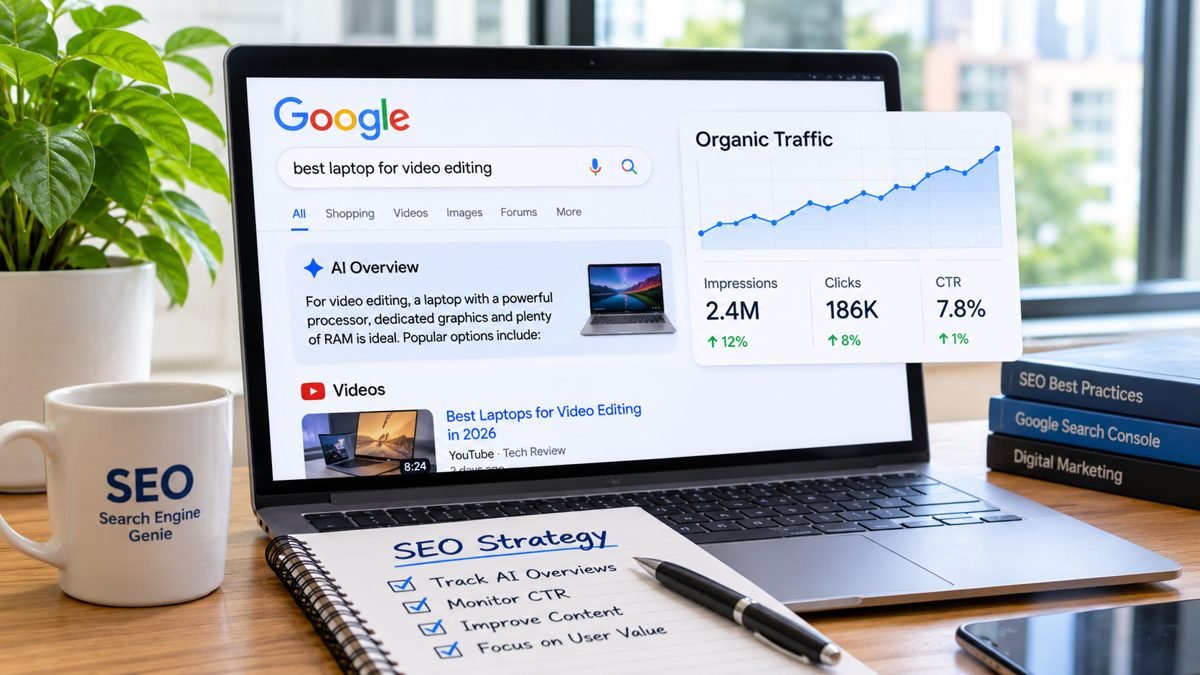
For publishers and business owners, that scenario raises an uncomfortable question: what happens to your pipeline when strong search visibility no longer delivers the same volume of website visits?
With AI Overviews appearing across more queries, this is no longer a theoretical concern. Instead of guessing how much traffic AI is taking, SEO teams need to look closely at their own data to see what is actually shifting.
Visibility and Website Visits Are Not the Same Thing
Ranking on page one without getting the click is nothing new—featured snippets, weather widgets, and calculators have created “zero-click” searches for years. AI-generated summaries simply expand that behavior to broader, multi-step questions.
However, the impact varies wildly depending on your niche. Someone searching “what is schema markup” will often get everything they need from an AI summary. Someone comparing enterprise CRM software or hiring an SEO agency still wants proof, pricing context, and human expertise before making a decision. Broad industry panic is far less useful than segmenting your own site’s numbers.
Where to Look First in Google Search Console
Before blaming an algorithm update or AI Overview for a traffic dip, check three specific signals in Google Search Console:
1. Impressions vs. Clicks
If your impressions hold steady—or even climb—while clicks drop, your page hasn’t necessarily lost visibility. Check the live search results for those exact queries to see if an AI Overview, video carousel, or ad block pushed your organic listing below the fold.
2. Click-Through Rate (CTR) by Position
Never look at CTR in isolation. Compare it directly against your average position. A lower CTR while sitting in position #2 doesn’t automatically prove AI Overviews are at fault—seasonal shifts, stronger competitor title tags, or new SERP features can cause the exact same pattern.
3. Query Intent Buckets
Separate your top-of-funnel informational queries from commercial and branded searches. Informational traffic is usually the first to soften when AI summaries appear, while high-intent commercial queries often hold their click volume much better. Always evaluate trends over a 4-to-8-week window rather than reacting to a single slow week.
Give Searchers a Reason an AI Summary Can’t Replace
If an article only repeats definitions and surface-level tips that already exist on fifty other blogs, an AI summary will easily replace the click. To earn the visit, your page needs assets a summary can’t replicate:
- Original data or mini case studies from real campaigns
- Side-by-side comparisons with clear pros, cons, and pricing nuances
- Firsthand walkthroughs with annotated screenshots or downloadable templates
For example, a guide on improving Core Web Vitals becomes far more compelling when it walks through a real diagnostic workflow with actual before-and-after PageSpeed screenshots rather than generic advice to “compress your images.”
Measure Pipeline, Not Just Sessions
Raw organic traffic is a helpful health metric, but it doesn’t pay the bills. Pair your Search Console reports with conversion tracking in GA4 or your CRM to watch form submissions, phone calls, demo requests, and assisted revenue.
In many cases, losing 20% of low-intent informational clicks has zero negative impact on leads—and a smaller group of high-intent visitors who actually read your comparison pages will outperform high-bounce blog traffic every time.
Focus on Evidence Over Assumptions
AI search is changing how people discover information, and that evolution isn’t slowing down. Rather than attributing every traffic fluctuation to AI Overviews, keep auditing your query intent, upgrade pages that rely on generic advice, and tie your SEO reporting directly to business outcomes.
Want help separating real conversion drops from harmless informational shifts? Connect with the team at Search Engine Genie to audit your Search Console and conversion data.
How Google AI Search Is Changing SEO Content Strategies
Google’s integration of artificial intelligence into search is changing how people discover information online. Features such as AI Overviews can provide summarized answers directly within search results, influencing how users interact with websites.


For businesses, publishers, and SEO professionals, this creates a need to rethink traditional content strategies.
1. Focus on Search Intent
Search intent describes what users want to accomplish when entering a query.
Instead of concentrating only on keyword rankings, businesses should develop content that answers specific questions and helps visitors solve problems.
For example, an article about improving website traffic should explain practical steps, common mistakes, and ways to measure results.
2. Create Original and Helpful Content
AI-powered search makes generic, repetitive content less useful as a competitive advantage.
Websites should prioritize:
- Original research and practical examples
- Accurate, clearly explained information
- Relevant industry experience
- Updated and trustworthy sources
- Clear answers to important user questions
Useful content can support both traditional search visibility and opportunities to be referenced in AI-generated search experiences.
3. Improve Website Structure
Well-organized pages help visitors navigate information and make content easier for search engines to understand.
Important practices include descriptive headings, relevant internal links, meaningful page titles, and clear navigation.
Structured data can also help search engines interpret supported types of information, although it does not guarantee inclusion in AI-generated answers.
4. Strengthen Technical SEO
Technical SEO remains essential even as search technology evolves.
Website owners should regularly check:
- Crawlability and indexing
- Mobile usability
- Page loading performance
- Canonical URL configuration
- Broken links and server errors
Google Search Console can help identify indexing issues and changes in organic search performance.
5. Measure Search Performance Beyond Rankings
Traditional keyword rankings do not provide a complete picture of search visibility.
SEO teams should also monitor organic clicks, impressions, engagement, conversions, and the performance of important landing pages.
Comparing these metrics over time can help identify whether search changes are affecting meaningful business results.
Search
Blogroll
Categories
Recent Posts
Recent Comments
Archives
- November 2026
- August 2025
- December 2023
- November 2023
- October 2023
- September 2023
- August 2023
- June 2023
- May 2023
- April 2023
- March 2023
- February 2023
- January 2020
- January 2017
- May 2016
- December 2015
- July 2013
- February 2013
- January 2013
- December 2012
- November 2012
- October 2012
- September 2012
- July 2012
- June 2012
- April 2012
- March 2012
- February 2012
- January 2012
- December 2011
- November 2011
- October 2011
- September 2011
- August 2011
- July 2011
- May 2011
- April 2011
- March 2011
- February 2011
- January 2011
- December 2010
- November 2010
- October 2010
- September 2010
- August 2010
- July 2010
- March 2010
- February 2010
- January 2010
- December 2009
- October 2009
- September 2009
- August 2009
- July 2009
- June 2009
- May 2009
- April 2009
- March 2009
- February 2009
- January 2009
- December 2008
- November 2008
- October 2008
- September 2008
- August 2008
- July 2008
- June 2008
- May 2008
- April 2008
- March 2008
- February 2008
- January 2008
- December 2007
- November 2007
- October 2007
- September 2007
- August 2007
- July 2007
- June 2007
- April 2007
- March 2007
- February 2007
- January 2007
- December 2006
- November 2006
- October 2006
- September 2006
- August 2006
- July 2006
- May 2006
- April 2006
- February 2006
- January 2006
- December 2005