




From Keywords to Prompts: Optimizing for AI-Powered Search Assistants
The world of search is changing fast. Traditional keyword-based SEO is no longer the only way people discover content, because AI-powered search assistants like ChatGPT, Perplexity, Gemini, and Bing Copilot are becoming part of how users search and make decisions. Instead of typing short phrases, users now ask conversational prompts and expect direct, personalized answers. This shift is creating a new frontier—prompt-driven SEO—where brands need to adapt their content strategy so they remain visible and “recommended” inside AI-generated responses, not just ranked on a results page.
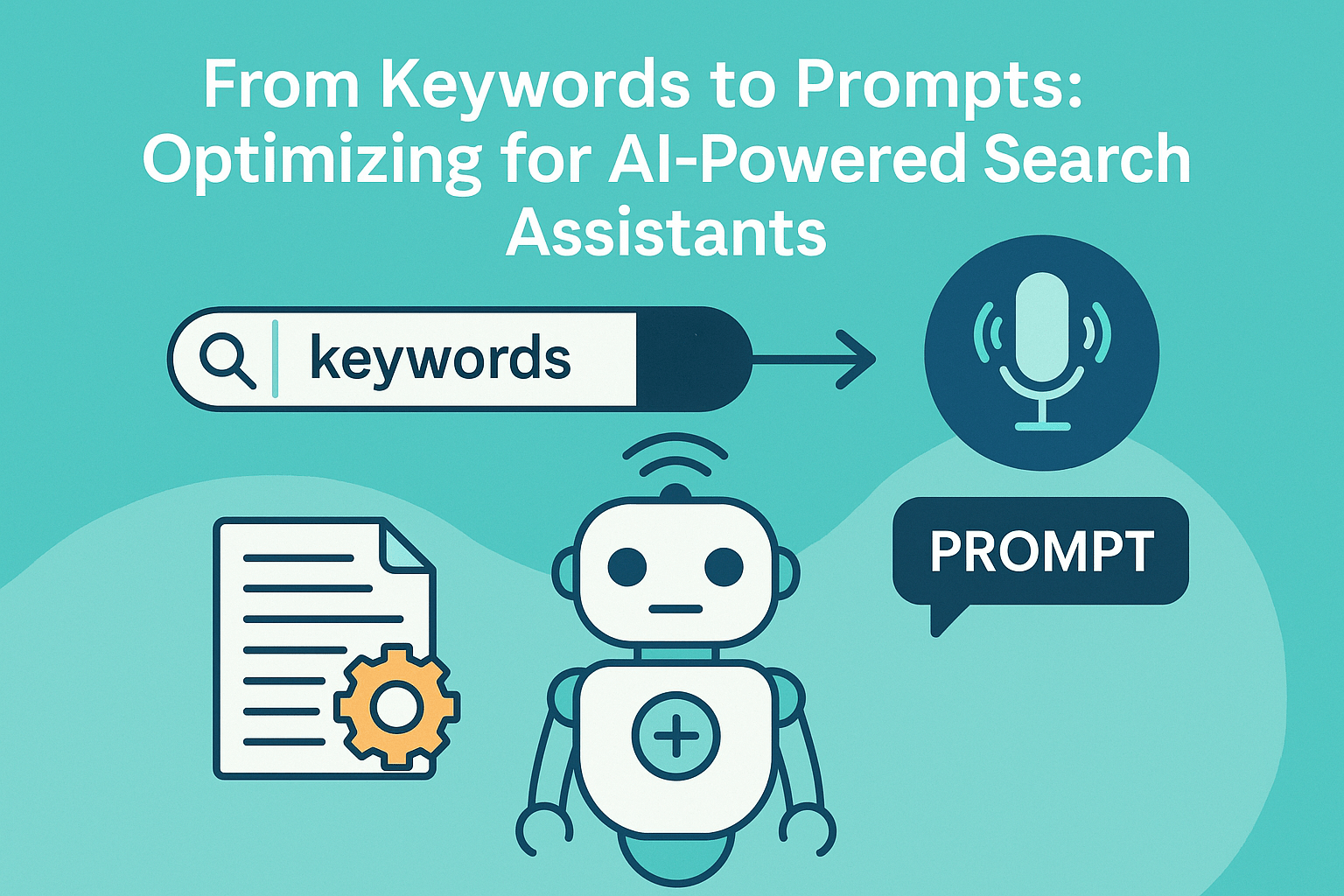
For decades, SEO revolved around keyword research and targeting high-volume terms, but keywords alone are no longer enough when intent is expressed in natural language. Compare the old search “best SEO tools” with a modern prompt like “What are the best SEO tools for small businesses in 2025, and which ones use AI features?” That second query includes audience, timeframe, and specific preferences—meaning your content needs to answer detailed, context-rich questions rather than just repeating a keyword. Prompts are basically the new SEO currency: AI assistants don’t just retrieve links, they generate answers, and your content has a better chance of being surfaced when it’s written conversationally, covers topics in depth, anticipates follow-up questions, and explains concepts clearly with examples, comparisons, pros/cons, and FAQs.
To optimize for AI-powered search, you’ll want to shift from pure keyword targeting to creating content around conversational queries and strong structure. Use question-style headings that mirror how people prompt AI (for example, “What is the difference between keywords and prompts?”), and build entity and semantic clarity by naming relevant tools, concepts, and terms while connecting them with internal links and schema where possible. This is where GEO—Generative Engine Optimization—comes in: a growing discipline focused on making content easy for AI systems to understand, trust, and reuse in generated answers. For example, if you run a fashion eCommerce store, instead of only optimizing for “men’s charcoal grey suit,” you’d also publish content answering prompts like “What occasions are best for wearing a charcoal grey three-piece suit?” or “How should men style a pleated pant suit for weddings?” The future of SEO is beyond keywords; brands that embrace prompt-optimized, comprehensive, entity-rich content now will be the ones that win visibility in the AI-driven search economy.
No comments yet.
Leave a comment
Blogroll
Categories
- 2016 SEO trends predictions
- AI for eCommerce
- AI Search & SEO
- author rank
- Authority Trust
- Bing search engine
- blogger
- CDN & Caching.
- Content Strategy
- Core Web Vitals
- eCommerce Growth
- Experience SEO
- Fake popularity
- gbp-optimization
- Google Adsense
- Google Business Profile Optimization
- google fault
- google impact
- google Investigation
- google knowledge
- Google panda
- Google penguin
- Google Plus
- Google Search Console
- Google Search Updates
- Google webmaster tools
- google-business-profile
- google-maps-ranking
- Hummingbird algorithm
- infographics
- link building
- Local SEO
- local-seo
- Mattcutts Video Transcript
- Microsoft
- Mobile Performance Optimization
- Mobile SEO
- MSN Live Search
- Negative SEO
- On-Page SEO
- Page Speed Optimization
- pagerank
- Paid links
- Panda and penguin timeline
- Panda Update
- Panda Update #22
- Panda Update 25
- Panda update releases 2012
- Penguin Update
- Performance Optimization
- Sandbox Tool
- search engines
- SEO
- SEO Audits
- SEO Audits & Monitoring
- SEO cartoons comics
- seo predictions
- SEO Recovery & Fixes
- SEO Reporting & Analytics
- seo techniques
- SEO Tips & Strategies
- SEO tools
- SEO Trends 2013
- seo updates
- Server Optimization
- Shopify Optimization
- Shopify SEO
- Shopify Services
- Small Business Marketing
- social bookmarking
- Social Media
- SOPA Act
- Spam
- Technical SEO
- Uncategorized
- User Experience (UX)
- Webmaster News
- website
- Website Security
- Website Speed Optimization
- Yahoo