




Mobile SEO
20 On-Page SEO Techniques for Better Google Rankings
Search Engine Optimization (SEO) helps websites appear higher on search engines like Google. One of the most important parts of SEO is On-Page SEO, which focuses on improving individual web pages to make them more helpful for both users and search engines.
Good On-Page SEO helps websites get more visibility, attract more visitors, and improve user experience. Even small improvements can help websites perform better over time.
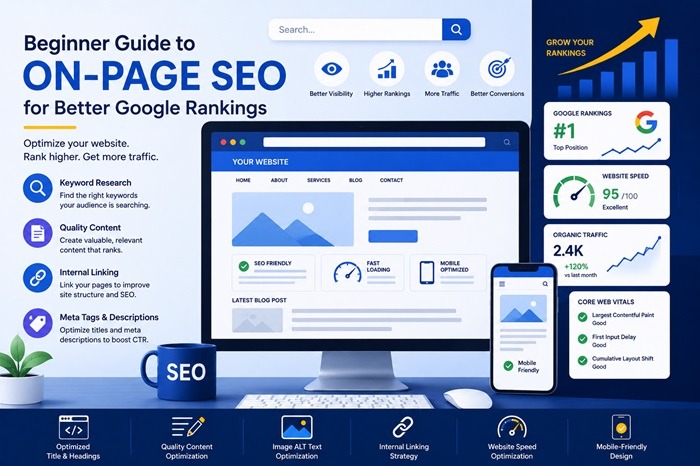
Here are 20 simple and beginner-friendly On-Page SEO tips every website owner should know.
1) Use Simple and Clear Page Titles:
Your page title should clearly explain what the page is about. Clear titles help people understand your content quickly and encourage more clicks from search results.
2) Add Keywords Naturally:
Use important keywords naturally throughout your content so search engines can understand your topic without making the content feel forced or repetitive.
3) Write Helpful Content for Readers:
Focus on creating useful content that answers questions, solves problems, and gives visitors the information they are looking for.
4) Organize Content with Headings:
Using headings helps break content into sections, making pages easier to read and helping visitors quickly find important information.
5) Write Good Meta Descriptions:
Meta descriptions are short summaries shown in Google search results. Clear descriptions can encourage more people to click your website.
6) Make Your Website Load Faster:
Fast websites create better experiences for visitors and help keep people from leaving your website too quickly.
7) Make Your Website Mobile-Friendly:
Most people browse websites on phones, so your website should look good and work properly on all screen sizes.
8) Add Links to Other Pages on Your Website:
Internal links help visitors explore more content and help search engines understand your website structure more clearly.
9) Use Optimized Images:
Large image files can slow down your website, so use properly sized and compressed images to improve loading speed.
10) Add Descriptions to Images:
Image alt text helps search engines understand your images and improves accessibility for users with screen readers.
11) Use Clean and Simple URLs:
Short and readable URLs make pages easier for users and search engines to understand.
12) Keep Paragraphs Short and Easy to Read:
Small paragraphs and simple language improve readability and help visitors stay engaged longer on your website.
13) Update Old Content Regularly:
Refreshing older pages with updated information helps keep your website relevant and useful for visitors.
14) Avoid Copying Content from Other Websites:
Original and unique content helps build trust and improves your chances of ranking better on search engines.
15) Secure Your Website with HTTPS:
Secure websites help protect visitor information and create more trust for both users and search engines.
16) Improve Overall User Experience:
Easy navigation, clear layouts, and fast-loading pages help visitors use your website more comfortably.
17) Use Attention-Grabbing Headlines:
Interesting headlines attract readers and encourage more people to click and continue reading your content.
18) Provide Valuable Information:
Content that teaches, helps, or answers questions creates better experiences for visitors and improves SEO performance.
19) Remove Unnecessary Plugins and Features:
Too many plugins or extra features can slow down your website and create a poor browsing experience.
20) Stay Consistent with SEO Improvements:
Regularly improving your website, updating content, and maintaining quality helps build long-term SEO success over time.
Mobile SEO Checklist (2026): Improve Rankings, Speed & Core Web Vitals
Mobile SEO is no longer optional. With Google fully focused on mobile-first indexing and user experience, your website’s mobile performance directly impacts rankings, traffic, and conversions. In 2026, businesses that ignore mobile SEO risk losing visibility to competitors with faster, smoother, and more user-friendly mobile sites.
This checklist covers the most important mobile SEO factors you need to focus on to improve rankings, page speed, and Core Web Vitals.

1. Optimize for Mobile-First Indexing
Google primarily evaluates the mobile version of your website for ranking. Make sure your mobile site contains the same important content as desktop, including text, images, internal links, and structured data.
Avoid hiding content on mobile and ensure your navigation is simple and crawlable.
2. Improve Mobile Page Speed
Speed is critical for both rankings and user experience. Slow-loading mobile pages lead to higher bounce rates and lost leads.
Focus on compressing images, reducing unused JavaScript and CSS, enabling browser caching, and using modern image formats like WebP. A fast site keeps users engaged and signals quality to Google.
3. Fix Core Web Vitals for Mobile
Core Web Vitals remain a key ranking factor in 2026, especially on mobile devices.
LCP (Largest Contentful Paint): Ensure main content loads quickly by optimizing images, fonts, and server response times.
FID (First Input Delay): Improve interactivity by reducing heavy JavaScript, minimizing third-party scripts, and ensuring pages respond instantly when users tap, click, or scroll on mobile.
CLS (Cumulative Layout Shift): Prevent layout shifts by defining image sizes and avoiding late-loading elements.
A strong Core Web Vitals score improves both rankings and real user experience.
4. Ensure Mobile-Friendly Design & UX
Your website should be easy to use on small screens. Buttons must be easy to tap, text should be readable without zooming, and layouts should adapt smoothly across devices.
Avoid intrusive pop-ups and make key actions—like calls or form submissions—simple and accessible.
5. Optimize Images for Mobile SEO
Images play a huge role in mobile performance. Large, unoptimized images slow pages down and hurt rankings.
Use proper file names, descriptive alt text, responsive image sizes, and lazy loading. Optimized images improve speed, accessibility, and visibility in Google Images.
6. Strengthen Mobile Local SEO Signals
Most mobile searches have local intent. Make sure your Google Business Profile is fully optimized, NAP details are consistent, and local keywords are included naturally on mobile pages.
Click-to-call buttons and location-based content help turn mobile traffic into real leads.
7. Test and Monitor Regularly
Mobile SEO isn’t a one-time fix. Use tools like Google Search Console, PageSpeed Insights, and real-device testing to monitor performance.
Regular testing helps you catch issues early and stay ahead of algorithm updates.
In 2026, winning at SEO means winning on mobile first. By following this mobile SEO checklist—focusing on speed, Core Web Vitals, user experience, and mobile-first optimization—you can improve rankings, attract more traffic, and convert more visitors.
Blogroll
Categories
- 2016 SEO trends predictions
- AI for eCommerce
- AI Search & SEO
- author rank
- Authority Trust
- Bing search engine
- blogger
- CDN & Caching.
- Content Strategy
- Core Web Vitals
- eCommerce Growth
- Experience SEO
- Fake popularity
- gbp-optimization
- Google Adsense
- Google Business Profile Optimization
- google fault
- google impact
- google Investigation
- google knowledge
- Google panda
- Google penguin
- Google Plus
- Google Search Console
- Google Search Updates
- Google webmaster tools
- google-business-profile
- google-maps-ranking
- Hummingbird algorithm
- infographics
- link building
- Local SEO
- local-seo
- Mattcutts Video Transcript
- Microsoft
- Mobile Performance Optimization
- Mobile SEO
- MSN Live Search
- Negative SEO
- On-Page SEO
- Page Speed Optimization
- pagerank
- Paid links
- Panda and penguin timeline
- Panda Update
- Panda Update #22
- Panda Update 25
- Panda update releases 2012
- Penguin Update
- Performance Optimization
- Sandbox Tool
- search engines
- SEO
- SEO Audits
- SEO Audits & Monitoring
- SEO cartoons comics
- seo predictions
- SEO Recovery & Fixes
- SEO Reporting & Analytics
- seo techniques
- SEO Tips & Strategies
- SEO tools
- SEO Trends 2013
- seo updates
- Server Optimization
- Shopify Optimization
- Shopify SEO
- Shopify Services
- Small Business Marketing
- social bookmarking
- Social Media
- SOPA Act
- Spam
- Technical SEO
- Uncategorized
- User Experience (UX)
- Webmaster News
- website
- Website Security
- Website Speed Optimization
- Yahoo