




seo updates
20 On-Page SEO Techniques for Better Google Rankings
Search Engine Optimization (SEO) helps websites appear higher on search engines like Google. One of the most important parts of SEO is On-Page SEO, which focuses on improving individual web pages to make them more helpful for both users and search engines.
Good On-Page SEO helps websites get more visibility, attract more visitors, and improve user experience. Even small improvements can help websites perform better over time.
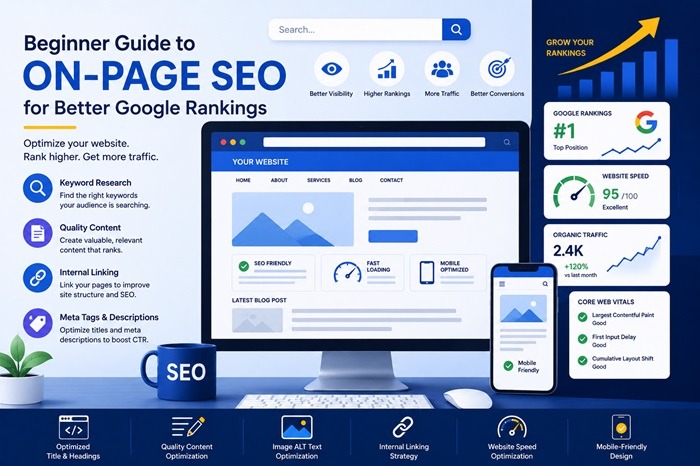
Here are 20 simple and beginner-friendly On-Page SEO tips every website owner should know.
1) Use Simple and Clear Page Titles:
Your page title should clearly explain what the page is about. Clear titles help people understand your content quickly and encourage more clicks from search results.
2) Add Keywords Naturally:
Use important keywords naturally throughout your content so search engines can understand your topic without making the content feel forced or repetitive.
3) Write Helpful Content for Readers:
Focus on creating useful content that answers questions, solves problems, and gives visitors the information they are looking for.
4) Organize Content with Headings:
Using headings helps break content into sections, making pages easier to read and helping visitors quickly find important information.
5) Write Good Meta Descriptions:
Meta descriptions are short summaries shown in Google search results. Clear descriptions can encourage more people to click your website.
6) Make Your Website Load Faster:
Fast websites create better experiences for visitors and help keep people from leaving your website too quickly.
7) Make Your Website Mobile-Friendly:
Most people browse websites on phones, so your website should look good and work properly on all screen sizes.
8) Add Links to Other Pages on Your Website:
Internal links help visitors explore more content and help search engines understand your website structure more clearly.
9) Use Optimized Images:
Large image files can slow down your website, so use properly sized and compressed images to improve loading speed.
10) Add Descriptions to Images:
Image alt text helps search engines understand your images and improves accessibility for users with screen readers.
11) Use Clean and Simple URLs:
Short and readable URLs make pages easier for users and search engines to understand.
12) Keep Paragraphs Short and Easy to Read:
Small paragraphs and simple language improve readability and help visitors stay engaged longer on your website.
13) Update Old Content Regularly:
Refreshing older pages with updated information helps keep your website relevant and useful for visitors.
14) Avoid Copying Content from Other Websites:
Original and unique content helps build trust and improves your chances of ranking better on search engines.
15) Secure Your Website with HTTPS:
Secure websites help protect visitor information and create more trust for both users and search engines.
16) Improve Overall User Experience:
Easy navigation, clear layouts, and fast-loading pages help visitors use your website more comfortably.
17) Use Attention-Grabbing Headlines:
Interesting headlines attract readers and encourage more people to click and continue reading your content.
18) Provide Valuable Information:
Content that teaches, helps, or answers questions creates better experiences for visitors and improves SEO performance.
19) Remove Unnecessary Plugins and Features:
Too many plugins or extra features can slow down your website and create a poor browsing experience.
20) Stay Consistent with SEO Improvements:
Regularly improving your website, updating content, and maintaining quality helps build long-term SEO success over time.
Fresh Updates on DMOZ and Random Musings from Alexa
In the ever-evolving landscape of the internet, staying abreast of the latest developments is crucial, and two noteworthy entities, DMOZ and Alexa, have recently made waves with fresh updates.
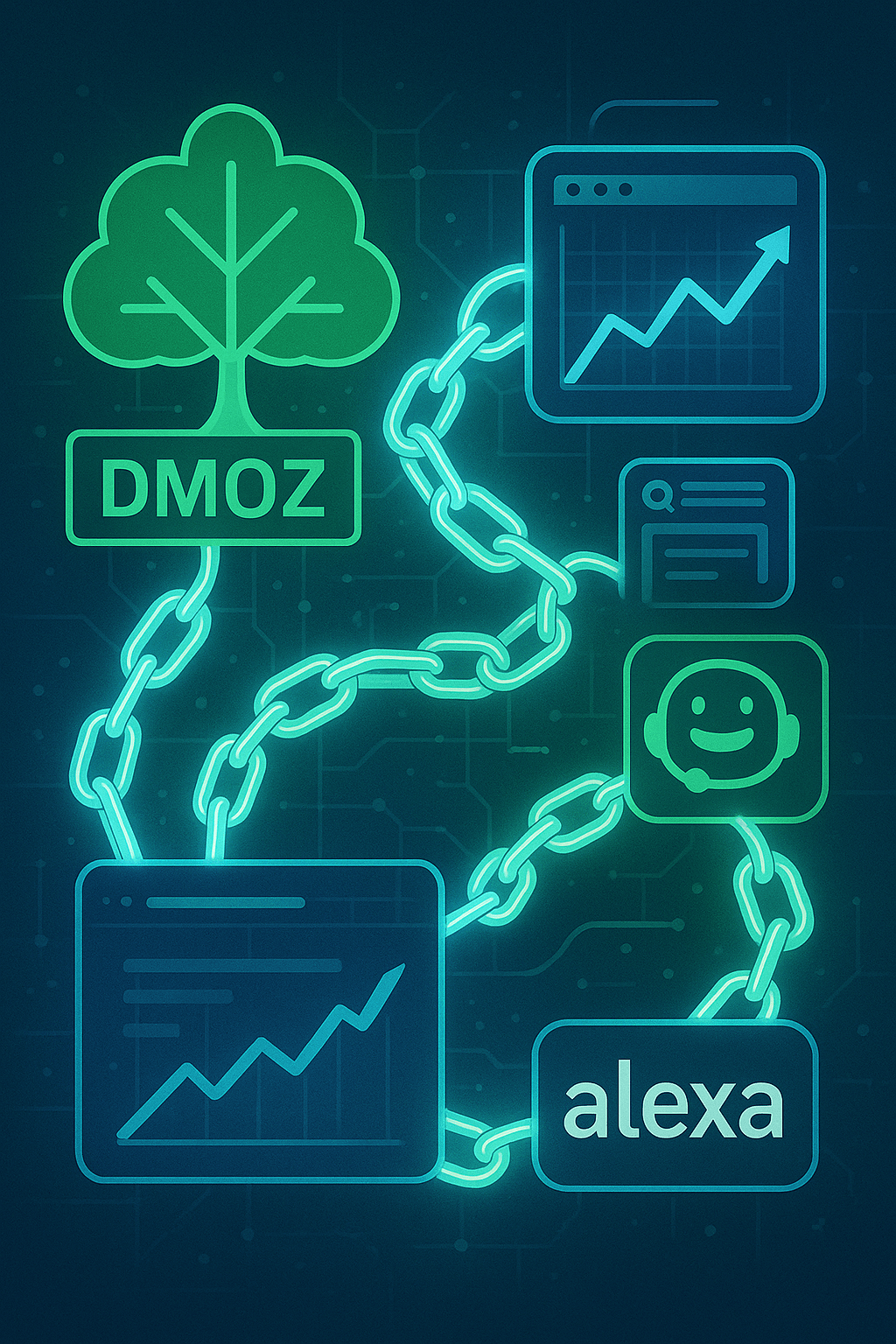
DMOZ, or the Open Directory Project, remains a stalwart directory that has long played a pivotal role in organizing and categorizing the vast expanse of the web. Recently, DMOZ has unveiled new updates, injecting a sense of vitality into its renowned platform. This development holds significance for website owners and users alike, as DMOZ continues to be a go-to resource for discovering and categorizing online content. As the digital realm evolves, the relevance and functionality of DMOZ remain integral, making these updates a subject of keen interest and exploration for those navigating the virtual landscape.
On the other front, Alexa, the web analytics and ranking powerhouse, has been engaging in random musings that captivate the attention of those keen on understanding the digital pulse. Alexa’s insights and reflections on web traffic, trends, and site rankings provide a unique perspective on the dynamic nature of the online world. Alexa’s ramblings often delve into the intricacies of website popularity, user behavior, and the ever-shifting sands of the internet’s topography. For digital marketers, website owners, and anyone with an interest in the ebb and flow of online presence, these musings serve as valuable nuggets of wisdom and contemplation.
In essence, the fresh updates from DMOZ and the random musings from Alexa underscore the dynamism inherent in the digital sphere. DMOZ’s commitment to enhancing its directory platform reaffirms its relevance, while Alexa’s reflective insights add a layer of understanding to the complex interplay of factors shaping the online landscape. As both entities continue to evolve, their contributions stand as testament to the perpetual innovation and exploration that define the ever-expanding realm of the internet.
In the early days of SEO, two names carried huge weight: DMOZ (The Open Directory Project) and Alexa Internet. Both played pivotal roles in shaping how websites were discovered, ranked, and measured. While DMOZ and Alexa may now be relics of web history, they continue to spark fascinating discussions about how the internet evolved.
Here’s a look at the fresh updates around DMOZ’s legacy and some random but insightful musings about Alexa’s past impact.
1. DMOZ: The Human-Curated Directory
DMOZ was once considered the gold standard of web directories, with human editors curating websites into categories. A DMOZ listing could skyrocket a site’s visibility.
Update: Even though DMOZ officially shut down in 2017, its spirit lives on through Mirror directories and heritage SEO discussions. Many still consider a DMOZ-era listing as a badge of credibility.
2. Alexa: Web Traffic Rankings and Data
Alexa (owned by Amazon) provided traffic rankings, audience insights, and competitive analysis for decades. Although discontinued in 2022, Alexa rankings were once cited as an SEO bragging point.
Random Musings: Many SEOs remember chasing Alexa rankings as if they were gospel. In hindsight, it was more of a vanity metric than a true SEO driver — but it shaped how marketers thought about site authority.
3. Lessons for Modern SEO
What do DMOZ and Alexa teach us today?
The tools we use may change, but trust, authority, and credibility remain timeless SEO values.
Directories and rank metrics may fade, but content quality and backlinks are still crucial.
AI-driven search assistants might be the “new Alexa,” offering insights in real time.
While DMOZ and Alexa belong to the history books, their influence shaped the SEO industry we know today. Reflecting on their legacy reminds us that the internet is constantly evolving — but the need for trustworthy, user-first content never changes.
Blogroll
Categories
- 2016 SEO trends predictions
- AI for eCommerce
- AI Search & SEO
- author rank
- Authority Trust
- Bing search engine
- blogger
- CDN & Caching.
- Content Strategy
- Core Web Vitals
- eCommerce Growth
- Experience SEO
- Fake popularity
- gbp-optimization
- Google Adsense
- Google Business Profile Optimization
- google fault
- google impact
- google Investigation
- google knowledge
- Google panda
- Google penguin
- Google Plus
- Google Search Console
- Google Search Updates
- Google webmaster tools
- google-business-profile
- google-maps-ranking
- Hummingbird algorithm
- infographics
- link building
- Local SEO
- local-seo
- Mattcutts Video Transcript
- Microsoft
- Mobile Performance Optimization
- Mobile SEO
- MSN Live Search
- Negative SEO
- On-Page SEO
- Page Speed Optimization
- pagerank
- Paid links
- Panda and penguin timeline
- Panda Update
- Panda Update #22
- Panda Update 25
- Panda update releases 2012
- Penguin Update
- Performance Optimization
- Sandbox Tool
- search engines
- SEO
- SEO Audits
- SEO Audits & Monitoring
- SEO cartoons comics
- seo predictions
- SEO Recovery & Fixes
- SEO Reporting & Analytics
- seo techniques
- SEO Tips & Strategies
- SEO tools
- SEO Trends 2013
- seo updates
- Server Optimization
- Shopify Optimization
- Shopify SEO
- Shopify Services
- Small Business Marketing
- social bookmarking
- Social Media
- SOPA Act
- Spam
- Technical SEO
- Uncategorized
- User Experience (UX)
- Webmaster News
- website
- Website Security
- Website Speed Optimization
- Yahoo