




What Is Keyword Cannibalization and How Does It Hurt SEO?
Creating more content around an important keyword can seem like a good SEO strategy. But when several pages on the same website target nearly the same keyword and serve the same purpose, they can end up competing with each other.
This situation is known as keyword cannibalization.
Instead of helping Google understand which page is most relevant, similar pages can send mixed signals. As a result, rankings may become unstable, traffic may be split across multiple URLs, and the page you actually want to rank may struggle to perform.
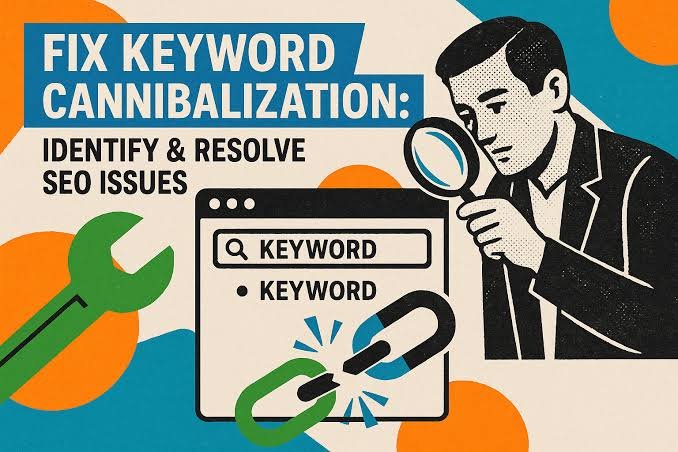
What Is Keyword Cannibalization?
Keyword cannibalization happens when two or more pages on the same website target the same keyword or very similar search intent.
For example, imagine a website has one article titled “Best SEO Tips” and another called “Top SEO Tips for Better Rankings.” If both pages cover almost the same information and target the same audience, Google may have difficulty deciding which one should rank.
This does not mean that using the same keyword on more than one page is always a problem. The issue appears when multiple pages are trying to satisfy the same search intent.
How Does Keyword Cannibalization Happen?
Cannibalization often develops naturally as a website grows.
A business may publish new content without realizing that an older article already covers the same topic. Similar service pages, category pages, product pages, and blog posts can also overlap over time.
Sometimes titles are different, but the content and purpose are nearly identical. In other cases, several pages may target small variations of the same keyword even though users expect the same type of result.
Without a clear content structure, it becomes easy for multiple pages to start competing for the same search visibility.
Why Can Keyword Cannibalization Hurt SEO?
When similar pages compete with each other, search engines may struggle to identify which page is the strongest result.
One page may rank one week while another replaces it later. Rankings can fluctuate, backlinks may be divided between multiple URLs, and internal links may point to different versions of similar content.
This can weaken the overall authority of the topic.
Keyword cannibalization can also create a confusing experience for users. If visitors find several pages saying almost the same thing, the website may feel repetitive rather than helpful.
The goal should be to have a clear page for each important search intent.
How Can You Identify Keyword Cannibalization?
A simple way to spot possible cannibalization is to search your own website for pages targeting the same subject.
Google Search Console can also help. If multiple URLs receive impressions for the same keyword, it may be worth checking whether those pages serve different purposes or are competing for the same intent.
Look at the titles, headings, page topics, and search results carefully.
If two pages provide genuinely different value, there may be no problem. But if they are nearly identical in purpose, combining or repositioning them may create a stronger SEO result.
How to Fix Keyword Cannibalization
The right solution depends on the pages involved.
If two articles cover the same topic, combining the strongest information into one complete page can be effective. The weaker page can then be redirected to the stronger one where appropriate.
Another option is to adjust the focus of each page so they target different search intentions.
Internal linking can also help make it clearer which page is the primary resource for a topic. Updating titles, headings, and content can further reduce unnecessary overlap.
The goal is not to remove every page that shares a keyword. It is to make sure each page has a clear and useful purpose.
Final Thoughts
Keyword cannibalization is not about simply using the same keyword more than once. It becomes a problem when multiple pages compete to answer the same search need.
A well-organized website should make it easy for search engines and users to understand which page is the main resource for each topic.
Reviewing older content, checking overlapping pages, and improving the structure of your website can help prevent your own pages from competing against each other.
Sometimes, better SEO is not about creating another page. It is about making the right existing page stronger.
No comments yet.
Leave a comment
Blogroll
Categories
- 2016 SEO trends predictions
- AI for eCommerce
- AI Search & SEO
- author rank
- Authority Trust
- Bing search engine
- blogger
- CDN & Caching.
- Content Strategy
- Core Web Vitals
- eCommerce Growth
- Experience SEO
- Fake popularity
- gbp-optimization
- Google Adsense
- Google Business Profile Optimization
- google fault
- google impact
- google Investigation
- google knowledge
- Google panda
- Google penguin
- Google Plus
- Google Search Console
- Google Search Updates
- Google webmaster tools
- google-business-profile
- google-maps-ranking
- Hummingbird algorithm
- infographics
- link building
- Local SEO
- local-seo
- Mattcutts Video Transcript
- Microsoft
- Mobile Performance Optimization
- Mobile SEO
- MSN Live Search
- Negative SEO
- On-Page SEO
- Page Speed Optimization
- pagerank
- Paid links
- Panda and penguin timeline
- Panda Update
- Panda Update #22
- Panda Update 25
- Panda update releases 2012
- Penguin Update
- Performance Optimization
- Sandbox Tool
- search engines
- SEO
- SEO Audits
- SEO Audits & Monitoring
- SEO cartoons comics
- seo predictions
- SEO Recovery & Fixes
- SEO Reporting & Analytics
- seo techniques
- SEO Tips & Strategies
- SEO tools
- SEO Trends 2013
- seo updates
- Server Optimization
- Shopify Optimization
- Shopify SEO
- Shopify Services
- Small Business Marketing
- social bookmarking
- Social Media
- SOPA Act
- Spam
- Technical SEO
- Uncategorized
- User Experience (UX)
- Webmaster News
- website
- Website Security
- Website Speed Optimization
- Yahoo