




GBP Posts: Do They Still Work?
If you run a local business and you’re trying to get more calls, direction requests, and website visits from Google, you’ve probably asked this question: Do Google Business Profile (GBP) posts still work? The short answer is yes, but not in the “post once and instantly rank higher” way people expect. GBP posts are best viewed as a visibility and conversion tool. They help you keep your profile active, highlight offers, answer customer intent quickly, and give searchers a reason to choose you over competitors. This blog is for local business owners and service providers who want practical guidance on what to post, how often to post, and how to turn profile views into real enquiries.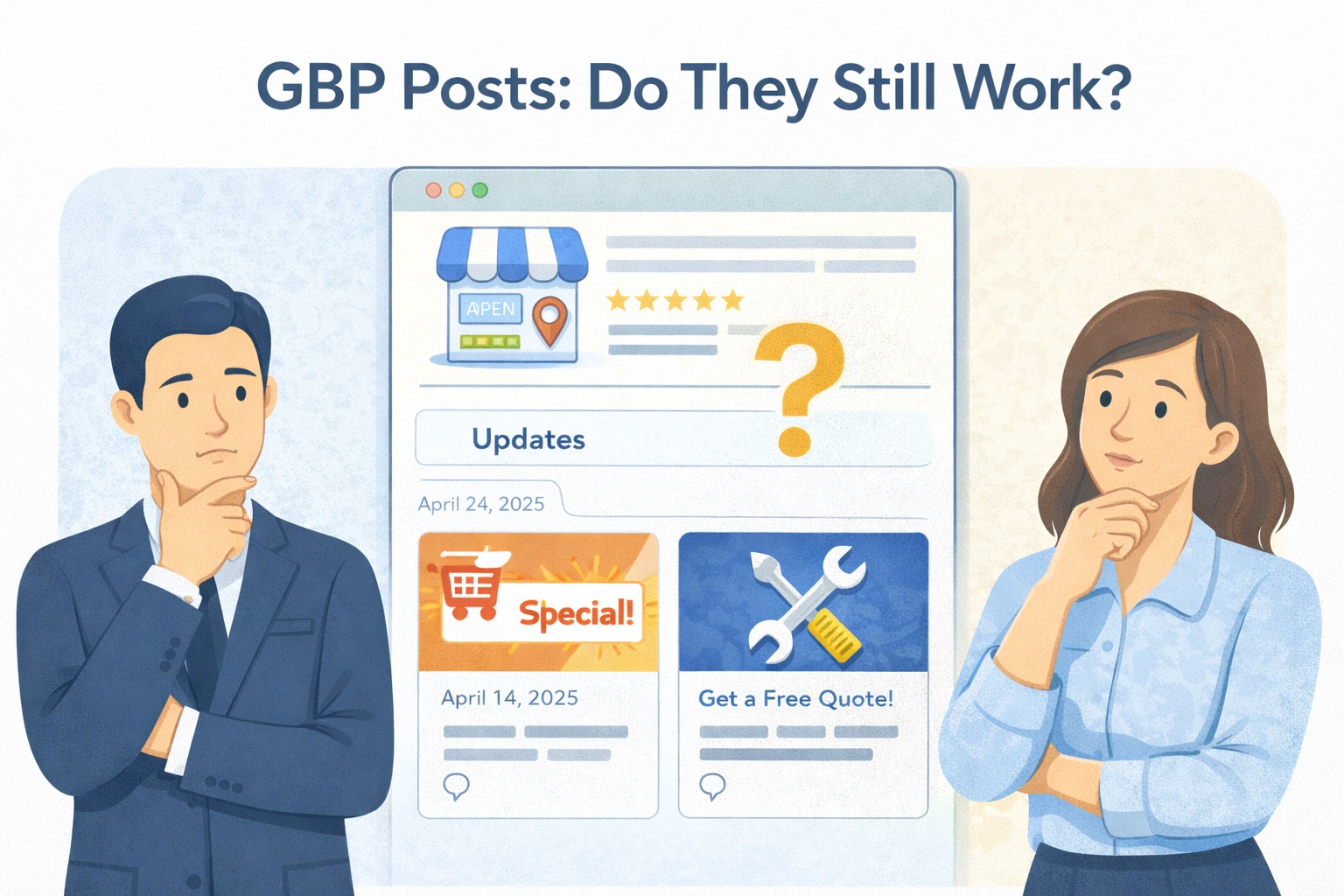
First, it’s important to understand what GBP posts actually do. Posts show up inside your Business Profile and can appear in different areas depending on device and search type, like “Updates,” “Offers,” or “What’s happening.” A post doesn’t replace SEO, reviews, or categories-but it supports them by improving engagement and trust. Think of it like this: rankings get you seen, but posts help you get chosen. When someone compares businesses in the same area, a profile with recent updates, clear promotions, and helpful info feels more active and reliable. That can increase clicks, calls, and messages even if your ranking position stays the same.
So what should you post to get results? The best performing posts usually fall into three types: offers, proof, and answers. Offers include discounts, seasonal deals, free inspections, or limited-time packages. Proof includes before/after photos, completed job highlights, short case studies, or “customer of the week” stories. Answers include quick tips and common questions people ask, like pricing ranges, service areas, what’s included, or how long a service takes. Keep the message simple: one clear headline, one benefit, one action. Use real photos whenever possible-stock images look generic and don’t build the same trust. If you’re a service business, posts like “Same-day service available,” “Free quote in 10 minutes,” or “New service area added” tend to attract ready-to-buy customers.
How often should you post? For most local businesses, 1-2 posts per week is a strong baseline, and it’s better to be consistent than to post daily for one week and disappear for two months. Create a basic content loop: Week 1 offer, Week 2 proof, Week 3 FAQ/answer, Week 4 seasonal update-then repeat. Each post should have a clear CTA such as “Call now,” “Get directions,” “Book,” or “Send message.” Also, align your posts with real business priorities: if weekends are slow, post a weekend offer; if a service is high-margin, feature it every week; if you want more bookings, use “limited slots” messaging. The goal is not just to post-it’s to influence the decision at the exact moment people are choosing.
Finally, GBP posts work best when combined with the fundamentals that actually move local rankings: correct categories, complete services, accurate business info, strong reviews, and a fast website. Posts are the extra layer that improves conversion and keeps your profile fresh. If you want a simple plan, start with this: set up 4 post templates (Offer, Proof, FAQ, Update), schedule them weekly, and track what changes in your profile insights-calls, messages, and website clicks.
No comments yet.
Leave a comment
Blogroll
Categories
- AI Search & SEO
- author rank
- Authority Trust
- Bing search engine
- blogger
- CDN & Caching.
- Content Strategy
- Core Web Vitals
- Experience SEO
- Fake popularity
- gbp-optimization
- Google Adsense
- Google Business Profile Optimization
- google fault
- google impact
- google Investigation
- google knowledge
- Google panda
- Google penguin
- Google Plus
- Google Search Console
- Google Search Updates
- Google webmaster tools
- google-business-profile
- google-maps-ranking
- Hummingbird algorithm
- infographics
- link building
- Local SEO
- local-seo
- Mattcutts Video Transcript
- Microsoft
- Mobile Performance Optimization
- Mobile SEO
- MSN Live Search
- Negative SEO
- On-Page SEO
- Page Speed Optimization
- pagerank
- Paid links
- Panda and penguin timeline
- Panda Update
- Panda Update #22
- Panda Update 25
- Panda update releases 2012
- Penguin Update
- Performance Optimization
- Sandbox Tool
- search engines
- SEO
- SEO Audits
- SEO Audits & Monitoring
- SEO cartoons comics
- seo predictions
- SEO Recovery & Fixes
- SEO Reporting & Analytics
- seo techniques
- SEO Tips & Strategies
- SEO tools
- SEO Trends 2013
- seo updates
- Server Optimization
- Small Business Marketing
- social bookmarking
- Social Media
- SOPA Act
- Spam
- Technical SEO
- Uncategorized
- User Experience (UX)
- Webmaster News
- website
- Website Security
- Website Speed Optimization
- Yahoo