




Nielsen’s Latest Top Ten in Usability
Nielsen’s Latest Top Ten in Usability provides valuable insights into the current trends and benchmarks in user experience. This list, curated by usability expert Jakob Nielsen, reflects the evolving landscape of usability in digital interfaces. The rankings likely encompass factors such as website navigation, accessibility, responsiveness, and overall user satisfaction.
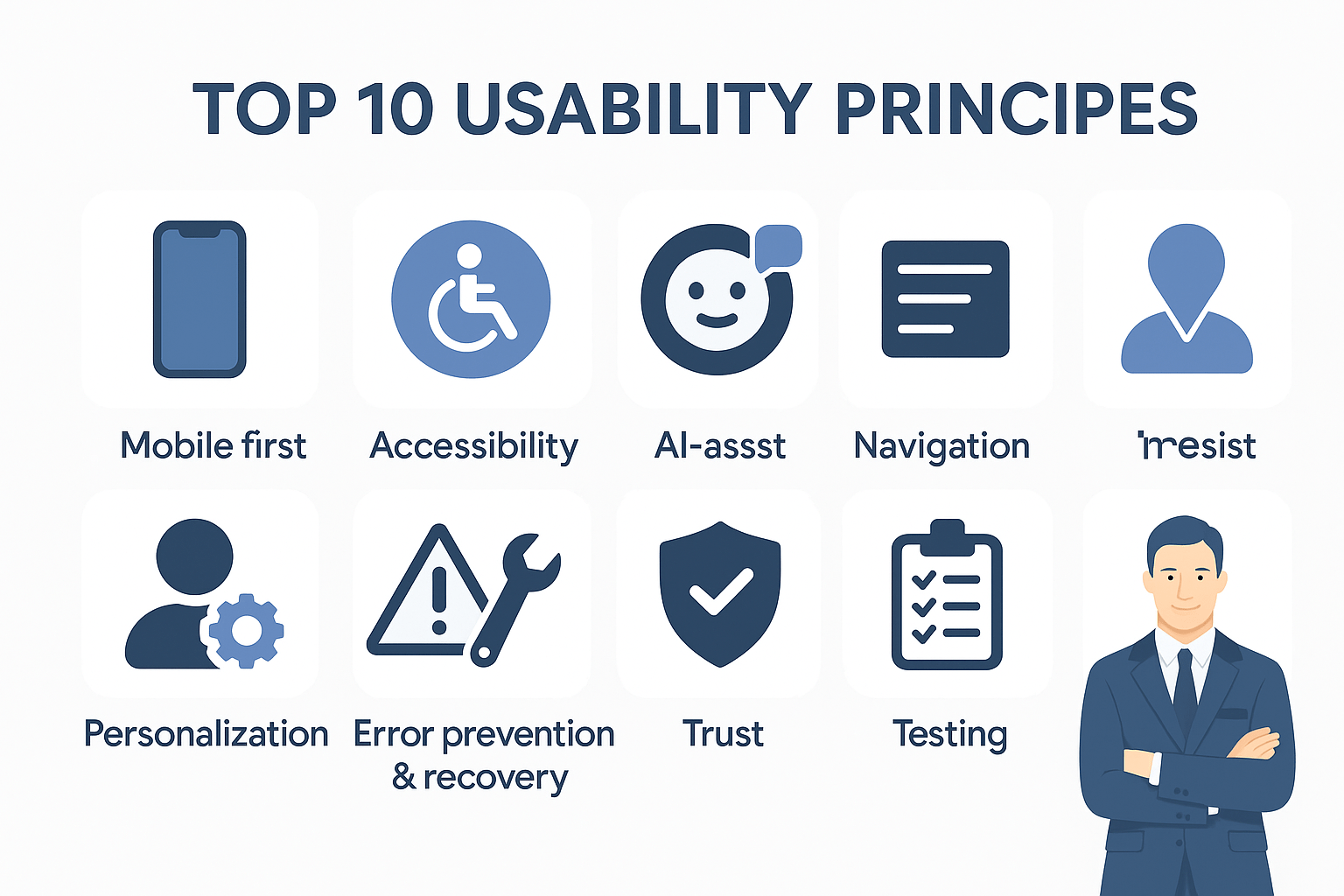
Usability is a critical aspect of web design, influencing user engagement and success in achieving specific goals. Nielsen’s expertise in this field ensures that the Top Ten highlights platforms that excel in creating intuitive, user-friendly experiences. It’s essential for businesses and developers to stay informed about these rankings, as they offer a snapshot of best practices and emerging standards in usability.
Staying abreast of Nielsen’s Latest Top Ten in Usability is not only beneficial for professionals in the web development and design industries but also for users who increasingly rely on digital platforms for various tasks. As technology evolves, the usability of digital interfaces plays a pivotal role in enhancing user experiences and shaping the future of user-centric design.
When it comes to user experience (UX), few names carry as much weight as Jakob Nielsen, co-founder of the Nielsen Norman Group (NN/g). Known as the “guru of web usability,” Nielsen’s research has shaped how businesses, designers, and developers approach digital product design for decades.
Recently, Nielsen and NN/g released their latest “Top Ten in Usability” list, highlighting the most important principles shaping the future of user experience. Whether you’re a UX designer, product manager, or digital marketer, understanding these insights is essential to building products people love to use.
Nielsen’s usability guidelines matter because they’re not just “nice ideas” about design—they’re practical, research-backed best practices proven through years of user testing. When teams follow these principles, websites and apps become easier to use, which directly reduces user frustration and confusion. That translates into better task completion (people can actually do what they came for), higher satisfaction, stronger retention, and ultimately better business outcomes because the product is built around real user behavior instead of assumptions.
Nielsen’s latest usability insights show where modern UX priorities are heading, especially as technology and user expectations evolve. Mobile-first experience is now essential because most users interact on small screens, so responsiveness and thumb-friendly design can’t be optional. Clarity beats cleverness—users want straightforward labels and visible features instead of confusing jargon or hidden interactions. Accessibility has moved from “extra” to “core,” ensuring everyone—including people with disabilities—can use your product comfortably. Performance remains a major UX factor, since faster load times reduce bounce rates and keep users engaged. AI-integrated assistance is also becoming part of usability, meaning AI features should support users naturally without cluttering or overwhelming the interface. Personalization can boost engagement when it adapts content to user needs, but it must stay transparent and easy to control. Navigation should be simple and predictable, supported by clear menus, search, and breadcrumbs to reduce friction. Error prevention and recovery still matter a lot—good validation, clear messages, and undo options help users recover quickly. Trust and transparency are growing priorities too, with users expecting honest messaging, visible policies, and secure experiences. And finally, usability isn’t a one-time checklist—continuous testing and iteration is key, using feedback loops to keep improving as users and platforms change.
Businesses can apply these insights by building usability into their routine, not treating it as a final polish step. That means running regular usability tests, prioritizing mobile optimization and accessibility on every project, and using analytics plus customer feedback to identify where users struggle. Teams should also be trained to think in a user-centered way so decisions are based on what people actually need. Nielsen’s top usability priorities reinforce a timeless truth: while tools and trends evolve, great design still comes down to making experiences simple, clear, fast, and user-friendly—so customers not only succeed quickly, but also trust your brand and keep coming back.
No comments yet.
Leave a comment
Blogroll
Categories
- AI Search & SEO
- author rank
- Authority Trust
- Bing search engine
- blogger
- CDN & Caching.
- Content Strategy
- Core Web Vitals
- Experience SEO
- Fake popularity
- gbp-optimization
- Google Adsense
- Google Business Profile Optimization
- google fault
- google impact
- google Investigation
- google knowledge
- Google panda
- Google penguin
- Google Plus
- Google Search Console
- Google Search Updates
- Google webmaster tools
- google-business-profile
- google-maps-ranking
- Hummingbird algorithm
- infographics
- link building
- Local SEO
- local-seo
- Mattcutts Video Transcript
- Microsoft
- Mobile Performance Optimization
- Mobile SEO
- MSN Live Search
- Negative SEO
- On-Page SEO
- Page Speed Optimization
- pagerank
- Paid links
- Panda and penguin timeline
- Panda Update
- Panda Update #22
- Panda Update 25
- Panda update releases 2012
- Penguin Update
- Performance Optimization
- Sandbox Tool
- search engines
- SEO
- SEO Audits
- SEO Audits & Monitoring
- SEO cartoons comics
- seo predictions
- SEO Recovery & Fixes
- SEO Reporting & Analytics
- seo techniques
- SEO Tips & Strategies
- SEO tools
- SEO Trends 2013
- seo updates
- Server Optimization
- Small Business Marketing
- social bookmarking
- Social Media
- SOPA Act
- Spam
- Technical SEO
- Uncategorized
- User Experience (UX)
- Webmaster News
- website
- Website Security
- Website Speed Optimization
- Yahoo