




TechnicalSEO
How to Recover From a Sudden Drop in Organic Traffic
A sudden drop in organic traffic can be one of the most frustrating experiences for a website owner. If you own a corporate website, online store, or blog, experiencing a drop in traffic can be frustrating and is often a cause for worry when considering rankings, lead generation, and other aspects of your online presence. Even though a fall in traffic might be disheartening initially, there are particular reasons behind it.
First of all, it is important to know that the organic traffic will almost never decrease for no apparent reason. There are updates to search engine algorithms, there are advancements in the websites of your competitors, there might arise certain technical problems, and so forth. In many cases, just a minor adjustment you make to your site might impact the work of the search engines in terms of crawling, indexing, and ranking. This is why it is critical to establish the time when the decrease took place.
A possible reason for lower organic traffic could be a fall in the rankings of keywords. Pages that used to rank on the first page of Google may start getting lower rankings, causing lower clicks and lower visits. This can happen for several reasons, including increased competition, old content, or algorithm updates by Google. Keeping track of keyword ranks will give you a clear picture of the pages where you might have to work to increase rankings and traffic.
Problems related to technical SEO are another reason behind a fall in the number of visitors. Technical issues such as broken pages, indexing problems, crawl errors, and incorrect redirects can prevent search engines from accessing important pages on your website. Often, website owners don’t even know that there are technical problems until their traffic starts falling. Checking Google Search Console is very helpful for this.
The quality of the content is another essential factor that contributes significantly to keeping the website visible on search engine results. The idea behind this practice is to deliver the most relevant and useful information to the customers. Outdated content that does not satisfy the search criteria anymore will lead to falling rankings. Thus, it is necessary to update the existing content and address customer concerns.
Backlinks are another area that should be considered. Backlinks continue to play an important role in the rankings process, and any links lost from authoritative sites may impact your rankings. Tracking your backlinks will enable you to determine if any valuable links were lost or if competitors became more authoritative.
Website loading time and the user experience factor cannot be ignored as well. Poor loading speed, bad mobile compatibility, and Core Web Vitals may harm users and the website’s ranking. A speedy and responsive website stimulates interaction and allows for the faster crawling process by search engines. Website image optimization, removal of unnecessary scripts, and good hosting services may benefit SEO efforts.
The algorithm updates by Google can also affect the traffic you receive through organic searches. The search engines periodically make adjustments in their algorithms to provide better search results and lower the visibility of poor-quality pages. In case the fall in traffic was witnessed simultaneously with an update of the algorithm by Google, you should take time and analyze your website in detail. Make sure you are providing high-quality content and meeting other criteria to ensure better visibility and ranking even after the algorithm is updated.
Competitor monitoring is also crucial for you. Since ranking is very dynamic, and since your rivals could be producing superior quality content and gaining good backlinks, among others, then you need to compare yourself with them. This will help you to see where you are weak and how you can exploit those weaknesses to strengthen your content as well as improve your ranking.
If you have noticed a drop in organic traffic, know that you are not alone. Almost every website goes through ups and downs in search traffic at some point. The important thing here is how fast you find the reason behind the problem and react accordingly. By constantly monitoring your website, updating its content, and solving technical problems, you will definitely find your way back to being visible online.
20 On-Page SEO Techniques for Better Google Rankings
Search Engine Optimization (SEO) helps websites appear higher on search engines like Google. One of the most important parts of SEO is On-Page SEO, which focuses on improving individual web pages to make them more helpful for both users and search engines.
Good On-Page SEO helps websites get more visibility, attract more visitors, and improve user experience. Even small improvements can help websites perform better over time.
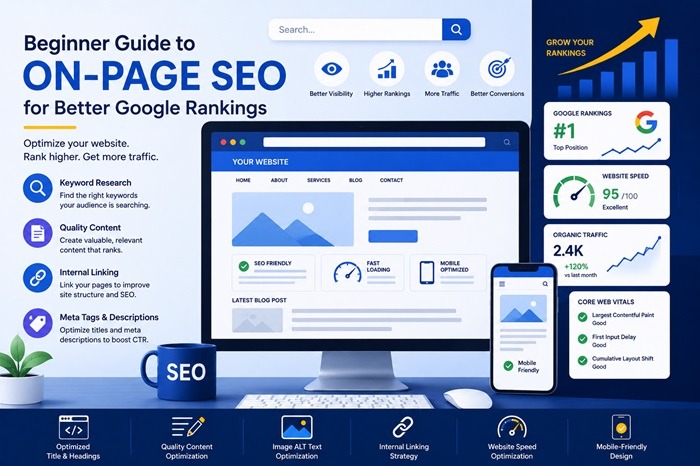
Here are 20 simple and beginner-friendly On-Page SEO tips every website owner should know.
1) Use Simple and Clear Page Titles:
Your page title should clearly explain what the page is about. Clear titles help people understand your content quickly and encourage more clicks from search results.
2) Add Keywords Naturally:
Use important keywords naturally throughout your content so search engines can understand your topic without making the content feel forced or repetitive.
3) Write Helpful Content for Readers:
Focus on creating useful content that answers questions, solves problems, and gives visitors the information they are looking for.
4) Organize Content with Headings:
Using headings helps break content into sections, making pages easier to read and helping visitors quickly find important information.
5) Write Good Meta Descriptions:
Meta descriptions are short summaries shown in Google search results. Clear descriptions can encourage more people to click your website.
6) Make Your Website Load Faster:
Fast websites create better experiences for visitors and help keep people from leaving your website too quickly.
7) Make Your Website Mobile-Friendly:
Most people browse websites on phones, so your website should look good and work properly on all screen sizes.
8) Add Links to Other Pages on Your Website:
Internal links help visitors explore more content and help search engines understand your website structure more clearly.
9) Use Optimized Images:
Large image files can slow down your website, so use properly sized and compressed images to improve loading speed.
10) Add Descriptions to Images:
Image alt text helps search engines understand your images and improves accessibility for users with screen readers.
11) Use Clean and Simple URLs:
Short and readable URLs make pages easier for users and search engines to understand.
12) Keep Paragraphs Short and Easy to Read:
Small paragraphs and simple language improve readability and help visitors stay engaged longer on your website.
13) Update Old Content Regularly:
Refreshing older pages with updated information helps keep your website relevant and useful for visitors.
14) Avoid Copying Content from Other Websites:
Original and unique content helps build trust and improves your chances of ranking better on search engines.
15) Secure Your Website with HTTPS:
Secure websites help protect visitor information and create more trust for both users and search engines.
16) Improve Overall User Experience:
Easy navigation, clear layouts, and fast-loading pages help visitors use your website more comfortably.
17) Use Attention-Grabbing Headlines:
Interesting headlines attract readers and encourage more people to click and continue reading your content.
18) Provide Valuable Information:
Content that teaches, helps, or answers questions creates better experiences for visitors and improves SEO performance.
19) Remove Unnecessary Plugins and Features:
Too many plugins or extra features can slow down your website and create a poor browsing experience.
20) Stay Consistent with SEO Improvements:
Regularly improving your website, updating content, and maintaining quality helps build long-term SEO success over time.
How SEOs can successfully collaborate with web developers

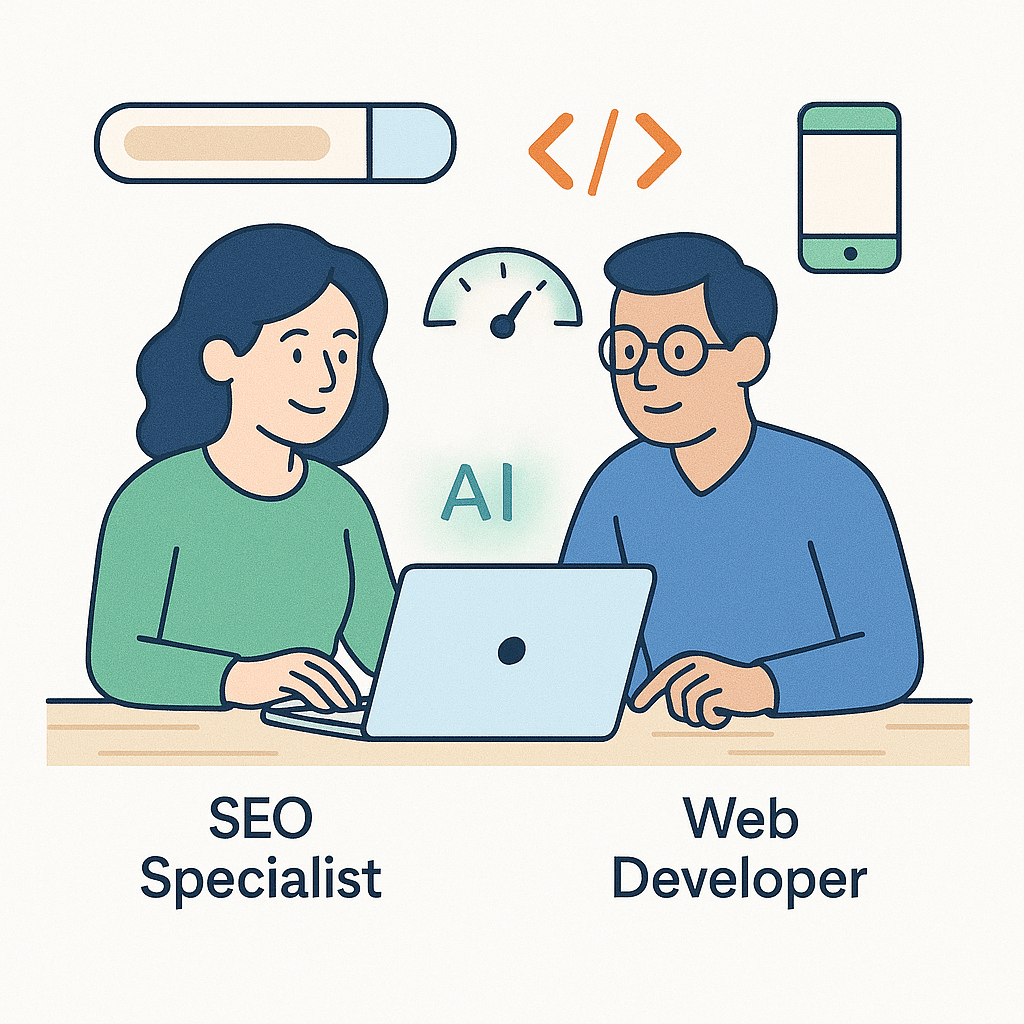
Collaboration between SEOs (Search Engine Optimizers) and web developers is crucial for creating a website that not only looks good but also performs well in search engine rankings. Here are some strategies for successful collaboration:
1. Open Communication Channels:
– Establish clear lines of communication between SEOs and web developers. Regular meetings, emails, and project management tools can be used to facilitate this.
2. Educate Each Other:
– SEOs should provide web developers with an understanding of SEO best practices, including keyword research, on-page optimization, and technical SEO elements.
– Web developers can educate SEOs about technical constraints and opportunities, ensuring that SEO strategies align with the website’s capabilities.
3. Involve SEO from the Beginning:
– Bring SEOs into the project from the planning phase. This ensures that SEO considerations are integrated from the outset rather than being retrofitted later.
4. Define Clear Roles and Responsibilities:
– Clearly outline who is responsible for what tasks. For instance, web developers handle technical implementations, while SEOs oversee content optimization and keyword targeting.
5. Collaborate on Site Architecture:
– Work together to design a logical site structure that is user-friendly and search engine-friendly. This includes navigation, URL structure, and internal linking.
6. Prioritize Page Speed and Performance:
– Web developers should optimize code, images, and other elements to ensure fast loading times. This is crucial for both user experience and SEO.
7. Mobile Optimization:
– Ensure the website is fully responsive and mobile-friendly. SEOs and web developers should work together to address any mobile-specific issues.
8. Implement Structured Data Markup:
– SEOs can provide guidance on implementing structured data to enhance search results, while web developers handle the technical implementation.
9. Collaborate on Content Creation and Optimization:
– SEOs should work with content creators to ensure that content is optimized for relevant keywords and provides value to users.
– Web developers can assist in creating a content management system (CMS) that is SEO-friendly and easy to use.
10. Technical SEO Audits:
– Conduct regular technical SEO audits to identify and address any issues. Web developers play a crucial role in implementing the necessary fixes.
11. Monitor Analytics and Reporting:
– SEOs and web developers should collaborate on setting up and interpreting web analytics. This helps track performance, identify areas for improvement, and measure the impact of SEO efforts.
12. Stay Updated on Industry Trends:
– Both SEOs and web developers should stay informed about the latest trends and updates in SEO and web development. This ensures that strategies remain effective in a constantly evolving landscape.
13. Test and Iterate:
– Continuously test and iterate on strategies. This includes A/B testing, monitoring rankings, and analyzing user behavior to make data-driven decisions.
14. Provide Constructive Feedback:
– Foster a culture of constructive feedback. This helps in refining processes and improving collaboration over time.
By following these strategies, SEOs and web developers can work together effectively to create websites that are optimized for search engines, user-friendly, and technically sound. This collaborative approach ultimately leads to better online visibility and user experiences.
Blogroll
Categories
- 2016 SEO trends predictions
- AI for eCommerce
- AI Search & SEO
- author rank
- Authority Trust
- Bing search engine
- blogger
- CDN & Caching.
- Content Strategy
- Core Web Vitals
- eCommerce Growth
- Experience SEO
- Fake popularity
- gbp-optimization
- Google Adsense
- Google Business Profile Optimization
- google fault
- google impact
- google Investigation
- google knowledge
- Google panda
- Google penguin
- Google Plus
- Google Search Console
- Google Search Updates
- Google webmaster tools
- google-business-profile
- google-maps-ranking
- Hummingbird algorithm
- infographics
- link building
- Local SEO
- local-seo
- Mattcutts Video Transcript
- Microsoft
- Mobile Performance Optimization
- Mobile SEO
- MSN Live Search
- Negative SEO
- On-Page SEO
- Page Speed Optimization
- pagerank
- Paid links
- Panda and penguin timeline
- Panda Update
- Panda Update #22
- Panda Update 25
- Panda update releases 2012
- Penguin Update
- Performance Optimization
- Sandbox Tool
- search engines
- SEO
- SEO Audits
- SEO Audits & Monitoring
- SEO cartoons comics
- seo predictions
- SEO Recovery & Fixes
- SEO Reporting & Analytics
- seo techniques
- SEO Tips & Strategies
- SEO tools
- SEO Trends 2013
- seo updates
- Server Optimization
- Shopify Optimization
- Shopify SEO
- Shopify Services
- Small Business Marketing
- social bookmarking
- Social Media
- SOPA Act
- Spam
- Technical SEO
- Uncategorized
- User Experience (UX)
- Webmaster News
- website
- Website Security
- Website Speed Optimization
- Yahoo