




SEOGuide
20 On-Page SEO Techniques for Better Google Rankings
Search Engine Optimization (SEO) helps websites appear higher on search engines like Google. One of the most important parts of SEO is On-Page SEO, which focuses on improving individual web pages to make them more helpful for both users and search engines.
Good On-Page SEO helps websites get more visibility, attract more visitors, and improve user experience. Even small improvements can help websites perform better over time.
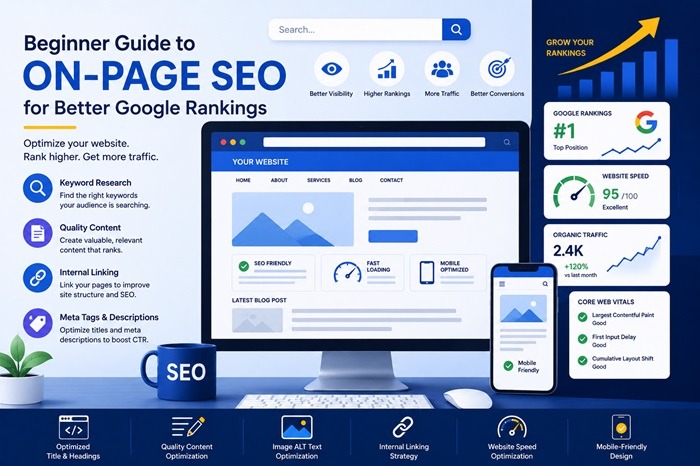
Here are 20 simple and beginner-friendly On-Page SEO tips every website owner should know.
1) Use Simple and Clear Page Titles:
Your page title should clearly explain what the page is about. Clear titles help people understand your content quickly and encourage more clicks from search results.
2) Add Keywords Naturally:
Use important keywords naturally throughout your content so search engines can understand your topic without making the content feel forced or repetitive.
3) Write Helpful Content for Readers:
Focus on creating useful content that answers questions, solves problems, and gives visitors the information they are looking for.
4) Organize Content with Headings:
Using headings helps break content into sections, making pages easier to read and helping visitors quickly find important information.
5) Write Good Meta Descriptions:
Meta descriptions are short summaries shown in Google search results. Clear descriptions can encourage more people to click your website.
6) Make Your Website Load Faster:
Fast websites create better experiences for visitors and help keep people from leaving your website too quickly.
7) Make Your Website Mobile-Friendly:
Most people browse websites on phones, so your website should look good and work properly on all screen sizes.
8) Add Links to Other Pages on Your Website:
Internal links help visitors explore more content and help search engines understand your website structure more clearly.
9) Use Optimized Images:
Large image files can slow down your website, so use properly sized and compressed images to improve loading speed.
10) Add Descriptions to Images:
Image alt text helps search engines understand your images and improves accessibility for users with screen readers.
11) Use Clean and Simple URLs:
Short and readable URLs make pages easier for users and search engines to understand.
12) Keep Paragraphs Short and Easy to Read:
Small paragraphs and simple language improve readability and help visitors stay engaged longer on your website.
13) Update Old Content Regularly:
Refreshing older pages with updated information helps keep your website relevant and useful for visitors.
14) Avoid Copying Content from Other Websites:
Original and unique content helps build trust and improves your chances of ranking better on search engines.
15) Secure Your Website with HTTPS:
Secure websites help protect visitor information and create more trust for both users and search engines.
16) Improve Overall User Experience:
Easy navigation, clear layouts, and fast-loading pages help visitors use your website more comfortably.
17) Use Attention-Grabbing Headlines:
Interesting headlines attract readers and encourage more people to click and continue reading your content.
18) Provide Valuable Information:
Content that teaches, helps, or answers questions creates better experiences for visitors and improves SEO performance.
19) Remove Unnecessary Plugins and Features:
Too many plugins or extra features can slow down your website and create a poor browsing experience.
20) Stay Consistent with SEO Improvements:
Regularly improving your website, updating content, and maintaining quality helps build long-term SEO success over time.
Blogroll
Categories
- 2016 SEO trends predictions
- AI for eCommerce
- AI Search & SEO
- author rank
- Authority Trust
- Bing search engine
- blogger
- CDN & Caching.
- Content Strategy
- Core Web Vitals
- eCommerce Growth
- Experience SEO
- Fake popularity
- gbp-optimization
- Google Adsense
- Google Business Profile Optimization
- google fault
- google impact
- google Investigation
- google knowledge
- Google panda
- Google penguin
- Google Plus
- Google Search Console
- Google Search Updates
- Google webmaster tools
- google-business-profile
- google-maps-ranking
- Hummingbird algorithm
- infographics
- link building
- Local SEO
- local-seo
- Mattcutts Video Transcript
- Microsoft
- Mobile Performance Optimization
- Mobile SEO
- MSN Live Search
- Negative SEO
- On-Page SEO
- Page Speed Optimization
- pagerank
- Paid links
- Panda and penguin timeline
- Panda Update
- Panda Update #22
- Panda Update 25
- Panda update releases 2012
- Penguin Update
- Performance Optimization
- Sandbox Tool
- search engines
- SEO
- SEO Audits
- SEO Audits & Monitoring
- SEO cartoons comics
- seo predictions
- SEO Recovery & Fixes
- SEO Reporting & Analytics
- seo techniques
- SEO Tips & Strategies
- SEO tools
- SEO Trends 2013
- seo updates
- Server Optimization
- Shopify Optimization
- Shopify SEO
- Shopify Services
- Small Business Marketing
- social bookmarking
- Social Media
- SOPA Act
- Spam
- Technical SEO
- Uncategorized
- User Experience (UX)
- Webmaster News
- website
- Website Security
- Website Speed Optimization
- Yahoo