




SEO Tips
What Is Search Intent and Why Is It Important for SEO?
Search intent is the reason behind a user’s search. It tells us what someone is actually trying to find when they type a query into Google.
A person searching for “how to improve website speed” wants information. Someone searching for “best SEO tools” may be comparing options. Another user searching for “SEO company near me” may already be ready to contact a service provider.
Understanding this difference helps businesses create content that matches what users actually want.
What Is Search Intent?
Search intent, also called user intent, is the goal behind a search query.
Google tries to understand whether a user wants to learn something, find a specific website, compare products or services, or take action.
This is why two similar keywords can show very different search results.
For SEO, choosing the right keyword is important, but understanding the intent behind that keyword is just as important.
Why Search Intent Matters for SEO
Search engines aim to show results that are most useful for the user.
If someone is looking for information but lands on a sales-focused page, they may leave quickly. In the same way, someone ready to buy may not want to read a long educational article.
When your content matches the user’s intent, it becomes more relevant and useful. This can improve engagement and help attract visitors who are genuinely interested in your content, product, or service.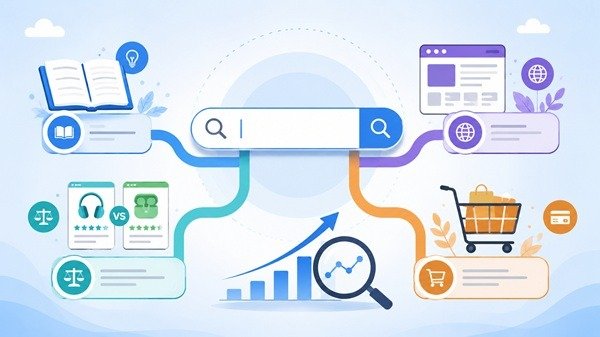
Types of Search Intent
Search intent is usually grouped into four main types.
Informational intent is when users want to learn something or find an answer.
Navigational intent is when users are looking for a particular website or brand.
Commercial intent is when users are researching and comparing options before making a decision.
Transactional intent is when users are ready to take action, such as buying a product, contacting a company, or signing up for a service.
Knowing the type of intent helps you decide what kind of page or content to create.
How to Understand Search Intent
One of the easiest ways to understand search intent is to look at the current Google results for your target keyword.
If most of the top results are blog posts, the intent is likely informational. If the results mostly show product or service pages, the intent may be commercial or transactional.
SERP features such as People Also Ask, featured snippets, shopping results, local listings, and videos can also give useful clues about what users are expecting.
How to Optimize Content for Search Intent
Start by understanding what the user wants before creating the content.
If the search is informational, provide a clear answer. If the user is comparing options, give helpful comparisons. If the intent is transactional, make it easy for the visitor to take the next step.
Your title, headings, and main content should all match the purpose of the search.
It is also useful to review older pages from time to time because search intent can change as user behavior and search results evolve.
Final Thoughts
Search intent helps you understand the meaning behind a keyword.
Instead of creating content only to target search terms, focus on giving users the type of information or solution they are actually looking for.
When your content matches search intent, it becomes more useful for visitors and more relevant for search engines.
What Are Backlinks and Why Do They Matter for SEO?
Backlinks are an important part of SEO, but the idea behind them is actually very simple.
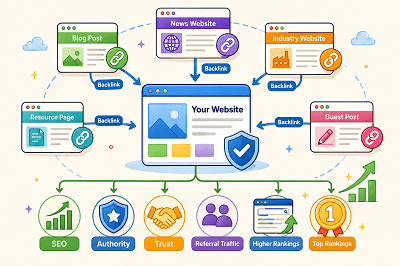
A backlink is a link from another website that points to your website.
For example, if another blog mentions your business and links to one of your pages, your website has received a backlink.
 What Is a Backlink?
Backlinks connect one website to another.
Imagine you publish a useful guide on your website. Another website finds that guide helpful and links to it in one of its articles.
That link becomes a backlink to your website.
Backlinks can send visitors directly to your site and can also help search engines discover your pages.
Why Do Backlinks Matter for SEO?
Backlinks can act as signals that other websites find your content useful or worth mentioning.
When reputable and relevant websites link to your pages, it can help strengthen your website’s authority and visibility in search results.
However, quality is more important than quantity.
One useful backlink from a trusted website can be more valuable than many links from low-quality or unrelated websites.
What Makes a Good Backlink?
A good backlink usually comes from a website that is relevant to your industry, trusted, and publishing useful content. The link should also appear naturally within the content instead of being forced. For example, if you run a digital marketing website, a backlink from a respected marketing or technology blog would usually be more valuable than a link from an unrelated website.
Are All Backlinks Good?
Not all backlinks are helpful. Some may come from spammy, low-quality, or unrelated websites, and these links may provide little value. Buying large numbers of backlinks or creating links only to manipulate rankings can also lead to SEO problems. A better approach is to focus on earning natural links from relevant and trustworthy websites.
How Can You Get Backlinks?
You can earn backlinks by creating useful content that other websites want to mention or share. This may include helpful guides, original research, industry articles, useful resources, or content that solves a common problem. You can also reach out to relevant websites or look for broken-link opportunities. The main goal is to create something valuable enough that another website has a genuine reason to link to it.
Backlinks vs Internal Links
Backlinks and internal links are different.
A backlink comes from another website to your website.
An internal link connects one page of your own website to another page on the same site.
Both are useful for SEO, but they serve different purposes.
Backlinks can help build your website’s authority, while internal links help users and search engines navigate your website.
Backlinks remain an important part of SEO because they can help search engines discover content and understand which pages other websites consider useful. Instead of chasing as many links as possible, focus on earning relevant, trustworthy, and natural backlinks by publishing genuinely useful content.
Why Is My Website Not Showing Up on Google? 7 Common SEO Problems
If your website does not show up on Google, there might be some reasons.
At times, it is because Google has not indexed your website. It may be the case that Google has indexed your website but your site is ranking very low.
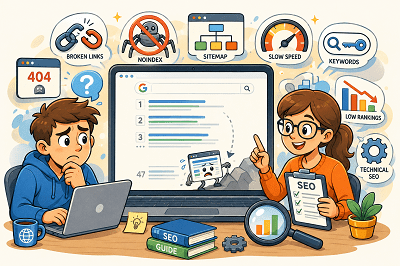
Here are the seven most common SEO issues:
1. Google Has Not Indexed Your Website
In order to show your web pages on Google, first, Google needs to crawl them.
Fix: Configure Google Search Console, submit your sitemap, and use URL Inspection tool.
2. Your Website Is Blocking Google
You have set noindex on your website or you have blocked your site by using a robots.txt file.
Fix: Make sure that you are not blocking Google in any way.
3. Your Website Has Technical SEO Issues
It may happen due to various technical issues such as broken links, server errors, incorrect redirects, and duplicate pages.
Fix: Do an SEO audit and correct any technical issues that might hinder crawling and indexing.
4. The Information Provided by Your Content Is Inadequate
Pages that have very little information can fail to rank.
Google loves content that is valuable, clear, and user-focused.
Fix: Make sure you create valuable content that clearly communicates your products, services, or topic.
5. You are Using the Wrong Keywords
Your site may fail to show up if you don’t target the terms used by people searching.
Fix: Make sure you use the right keywords within your title, headings, and body copy.
6. You Have Bad Internal Linking
Pages that have no or few internal links are less likely to be found by Google.
Fix: Make sure you link your pages and blog posts to each other for easy navigation by visitors and search engines.
7. Your Website Has a Low Rank
Your website might already be indexed but ranks below your competitors.
This is often due to the better content, backlinks, or SEO of competing sites.
Fix: Improve your website and its SEO over time.
Google Search Console can help you check whether your pages are indexed and identify possible SEO problems. If your website is not showing up on Google, start by checking indexing, then review your technical SEO, content, keywords, and internal links. Fixing these basic issues can help Google better understand your website and improve its chances of appearing in search results.
How to Recover From a Sudden Drop in Organic Traffic
A sudden drop in organic traffic can be one of the most frustrating experiences for a website owner. If you own a corporate website, online store, or blog, experiencing a drop in traffic can be frustrating and is often a cause for worry when considering rankings, lead generation, and other aspects of your online presence. Even though a fall in traffic might be disheartening initially, there are particular reasons behind it.
First of all, it is important to know that the organic traffic will almost never decrease for no apparent reason. There are updates to search engine algorithms, there are advancements in the websites of your competitors, there might arise certain technical problems, and so forth. In many cases, just a minor adjustment you make to your site might impact the work of the search engines in terms of crawling, indexing, and ranking. This is why it is critical to establish the time when the decrease took place.
A possible reason for lower organic traffic could be a fall in the rankings of keywords. Pages that used to rank on the first page of Google may start getting lower rankings, causing lower clicks and lower visits. This can happen for several reasons, including increased competition, old content, or algorithm updates by Google. Keeping track of keyword ranks will give you a clear picture of the pages where you might have to work to increase rankings and traffic.
Problems related to technical SEO are another reason behind a fall in the number of visitors. Technical issues such as broken pages, indexing problems, crawl errors, and incorrect redirects can prevent search engines from accessing important pages on your website. Often, website owners don’t even know that there are technical problems until their traffic starts falling. Checking Google Search Console is very helpful for this.
The quality of the content is another essential factor that contributes significantly to keeping the website visible on search engine results. The idea behind this practice is to deliver the most relevant and useful information to the customers. Outdated content that does not satisfy the search criteria anymore will lead to falling rankings. Thus, it is necessary to update the existing content and address customer concerns.
Backlinks are another area that should be considered. Backlinks continue to play an important role in the rankings process, and any links lost from authoritative sites may impact your rankings. Tracking your backlinks will enable you to determine if any valuable links were lost or if competitors became more authoritative.
Website loading time and the user experience factor cannot be ignored as well. Poor loading speed, bad mobile compatibility, and Core Web Vitals may harm users and the website’s ranking. A speedy and responsive website stimulates interaction and allows for the faster crawling process by search engines. Website image optimization, removal of unnecessary scripts, and good hosting services may benefit SEO efforts.
The algorithm updates by Google can also affect the traffic you receive through organic searches. The search engines periodically make adjustments in their algorithms to provide better search results and lower the visibility of poor-quality pages. In case the fall in traffic was witnessed simultaneously with an update of the algorithm by Google, you should take time and analyze your website in detail. Make sure you are providing high-quality content and meeting other criteria to ensure better visibility and ranking even after the algorithm is updated.
Competitor monitoring is also crucial for you. Since ranking is very dynamic, and since your rivals could be producing superior quality content and gaining good backlinks, among others, then you need to compare yourself with them. This will help you to see where you are weak and how you can exploit those weaknesses to strengthen your content as well as improve your ranking.
If you have noticed a drop in organic traffic, know that you are not alone. Almost every website goes through ups and downs in search traffic at some point. The important thing here is how fast you find the reason behind the problem and react accordingly. By constantly monitoring your website, updating its content, and solving technical problems, you will definitely find your way back to being visible online.
Blogroll
Categories
- 2016 SEO trends predictions
- AI for eCommerce
- AI Search & SEO
- author rank
- Authority Trust
- Bing search engine
- blogger
- CDN & Caching.
- Content Strategy
- Core Web Vitals
- eCommerce Growth
- Experience SEO
- Fake popularity
- gbp-optimization
- Google Adsense
- Google Business Profile Optimization
- google fault
- google impact
- google Investigation
- google knowledge
- Google panda
- Google penguin
- Google Plus
- Google Search Console
- Google Search Updates
- Google webmaster tools
- google-business-profile
- google-maps-ranking
- Hummingbird algorithm
- infographics
- link building
- Local SEO
- local-seo
- Mattcutts Video Transcript
- Microsoft
- Mobile Performance Optimization
- Mobile SEO
- MSN Live Search
- Negative SEO
- On-Page SEO
- Page Speed Optimization
- pagerank
- Paid links
- Panda and penguin timeline
- Panda Update
- Panda Update #22
- Panda Update 25
- Panda update releases 2012
- Penguin Update
- Performance Optimization
- Sandbox Tool
- search engines
- SEO
- SEO Audits
- SEO Audits & Monitoring
- SEO cartoons comics
- seo predictions
- SEO Recovery & Fixes
- SEO Reporting & Analytics
- seo techniques
- SEO Tips & Strategies
- SEO tools
- SEO Trends 2013
- seo updates
- Server Optimization
- Shopify Optimization
- Shopify SEO
- Shopify Services
- Small Business Marketing
- social bookmarking
- Social Media
- SOPA Act
- Spam
- Technical SEO
- Uncategorized
- User Experience (UX)
- Webmaster News
- website
- Website Security
- Website Speed Optimization
- Yahoo